Cluster Ring vs Solitaire: Which Engagement Ring Should You Choose?
Quick Answer: Choose a cluster ring if you love intricate designs, smaller accent diamonds, and sparkle spread across the finger. Choose a solitaire engagement ring if you want a single center stone to stand out and generally simpler upkeep. Neither style is automatically bigger, more durable, or more affordable. Compare diamond measurements, setting structure, and your budget before deciding.
An engagement ring should feel right in a proposal picture—and on an ordinary Tuesday. Cluster designs offer decorative character, while solitaire rings put one diamond in the spotlight. Here's how to choose between them.
Solitaire vs Cluster : Key Differences
A solitaire features one center gemstone, whether held by prongs, a bezel, or another setting. Traditional cluster rings group multiple smaller stones into a larger-looking pattern. Modern cluster designs, including Leonids styles, may instead frame a distinct central diamond with floral or side clusters.
|
Feature |
Cluster Ring |
Solitaire Ring |
|
Arrangement |
Grouped stones or clustered accents |
One featured center stone |
|
Appearance |
Floral, detailed, expressive |
Clean, classic, or sculptural |
|
Sparkle |
Spread across several diamonds |
Focused on the main diamond |
|
Maintenance |
More individual settings to inspect |
Often simpler to clean |
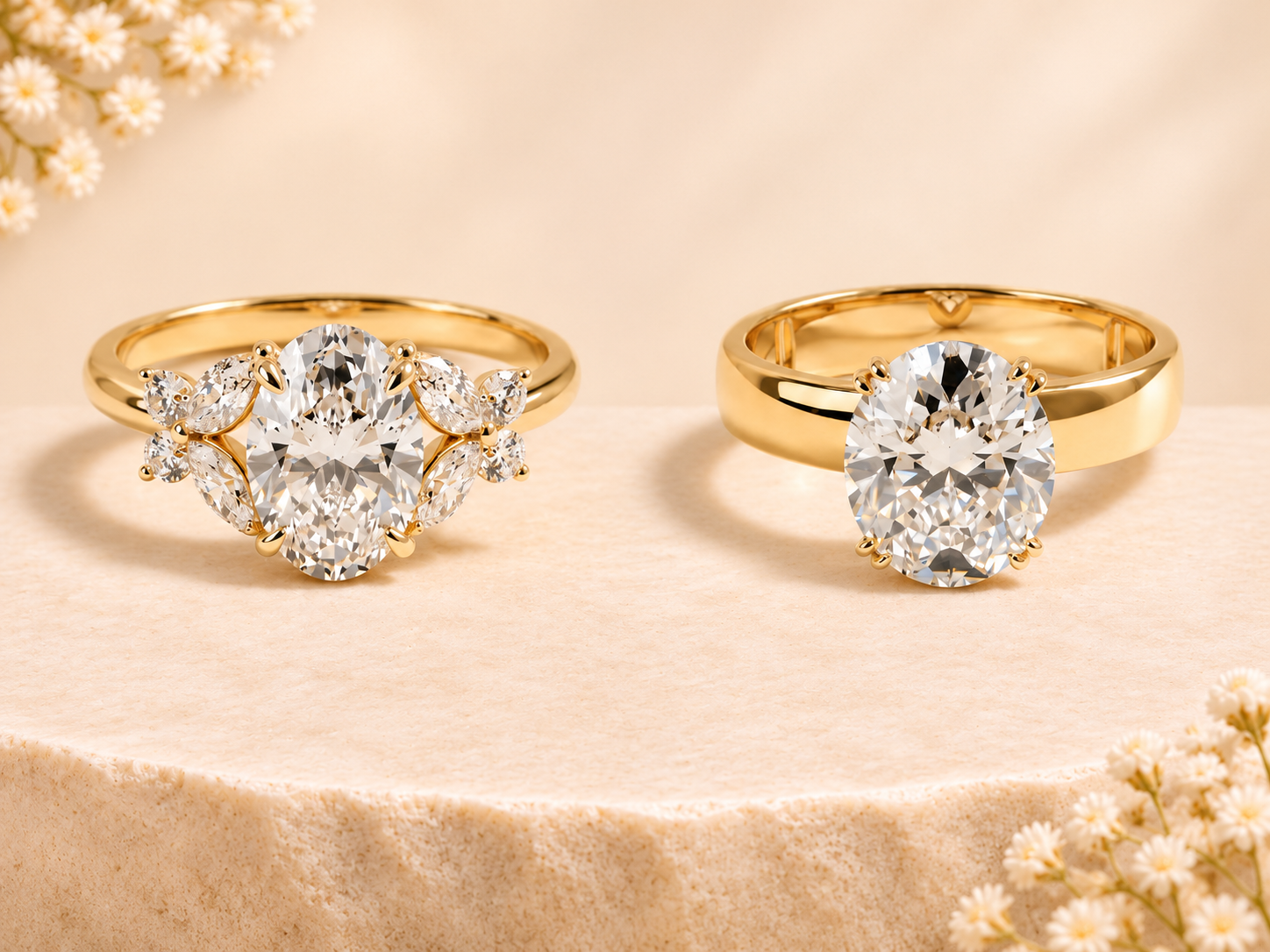
Solitaire describes the stone arrangement, not a particular band width or prong shape.
Which Looks Bigger and Sparkles More?
Overall Size vs. Center Diamond Size
Multiple smaller stones can increase a cluster ring's face-up coverage, creating the impression of a larger design. A solitaire emphasizes the shape and proportions of one stone.
But total carat weight (TCW) is not center-stone weight. A cluster featuring a 1.00-carat center and 0.30 carat of accents has 1.30 TCW; a 1.30-carat solitaire contains one larger diamond.
Compare actual millimeter measurements and on-hand photos, not carat weight alone.
What About Sparkle?
A well-cut solitaire can produce bold flashes of light from its central gem. Smaller cluster diamonds scatter reflections across the setting, creating a more glittering effect.
Neither design guarantees more sparkle. Diamond cut, light, proportions, and craftsmanship all affect brilliance.
Choose cluster for layered visual detail; choose solitaire for a clear focal point.
Which Offers Better Value for Your Budget?
A single larger diamond may cost more than several smaller diamonds with the same combined carat weight. However, prices vary with cut, color, clarity, origin, and market conditions. Setting complexity and craftsmanship also affect the final price.
There are two useful ways to compare value.
Same Center Stone: Match carat weight, approximate millimeter dimensions, diamond quality, and metal—such as white gold or platinum. Then decide whether the cluster's accent diamonds and craftsmanship justify any price difference.
Same Total Budget: Compare how much you can spend on a single larger diamond versus a center stone with decorative accents.
If center diamond size matters most, prioritize the single stone. If overall design, visual coverage, and decorative details are more important, a cluster setting may offer a more satisfying look within your budget.
Neither design is automatically the better bargain. Choose the balance of diamond quality, appearance, and comfort that matters most to you.
Which Is Better for Everyday Wear?
Many solitaire rings use four- or six-prong settings, although bezel and other structures are also available. With fewer small-stone settings, they are often easier to clean and inspect.
Cluster rings have more spaces where lotion and dirt can gather, plus additional prongs that benefit from regular checks. That doesn't make every cluster fragile. Quality, setting height, and smooth finishing all influence daily wear.
If you frequently wear gloves or work with your hands, inspect side-profile photos for raised edges and exposed prongs. A tall solitaire can snag, while a thoughtfully designed low-profile cluster may be comfortable.
Remove either ring for strenuous activities and arrange periodic professional inspections.
For more on setting construction, see GIA's guide to engagement ring settings.
Which Pairs Better With a Wedding Band?
A solitaire's simpler outline may offer more pairing options, but low-set stones can still prevent a straight wedding band from sitting flush.
Floral cluster accents may need a curved or contoured band.
Check side views and the actual clearance between both rings rather than assuming either style guarantees a match.
Cluster or Solitaire: Which Should You Choose?
|
Choose Cluster If… |
Choose Solitaire If… |
|
You love floral or intricate details |
You prefer one prominent diamond |
|
You enjoy sparkle across multiple stones |
You value timeless simplicity |
|
You want a decorative silhouette |
You prefer fewer small settings to maintain |
Leonids Comparison: Delilah vs. Elvina
|
Detail |
Delilah Cluster |
Elvina Solitaire |
|
Arrangement |
Oval center + six round accents |
One oval center |
|
Accent weight |
0.33ct total |
None |
|
Listed 1.00ct center dimensions |
5.7 × 8.0 mm |
5.0 × 7.0 mm |
|
Featured product photos |
2.00ct center |
3.00ct center |
|
Style |
Romantic floral setting |
Wide, sculptural cigar band |
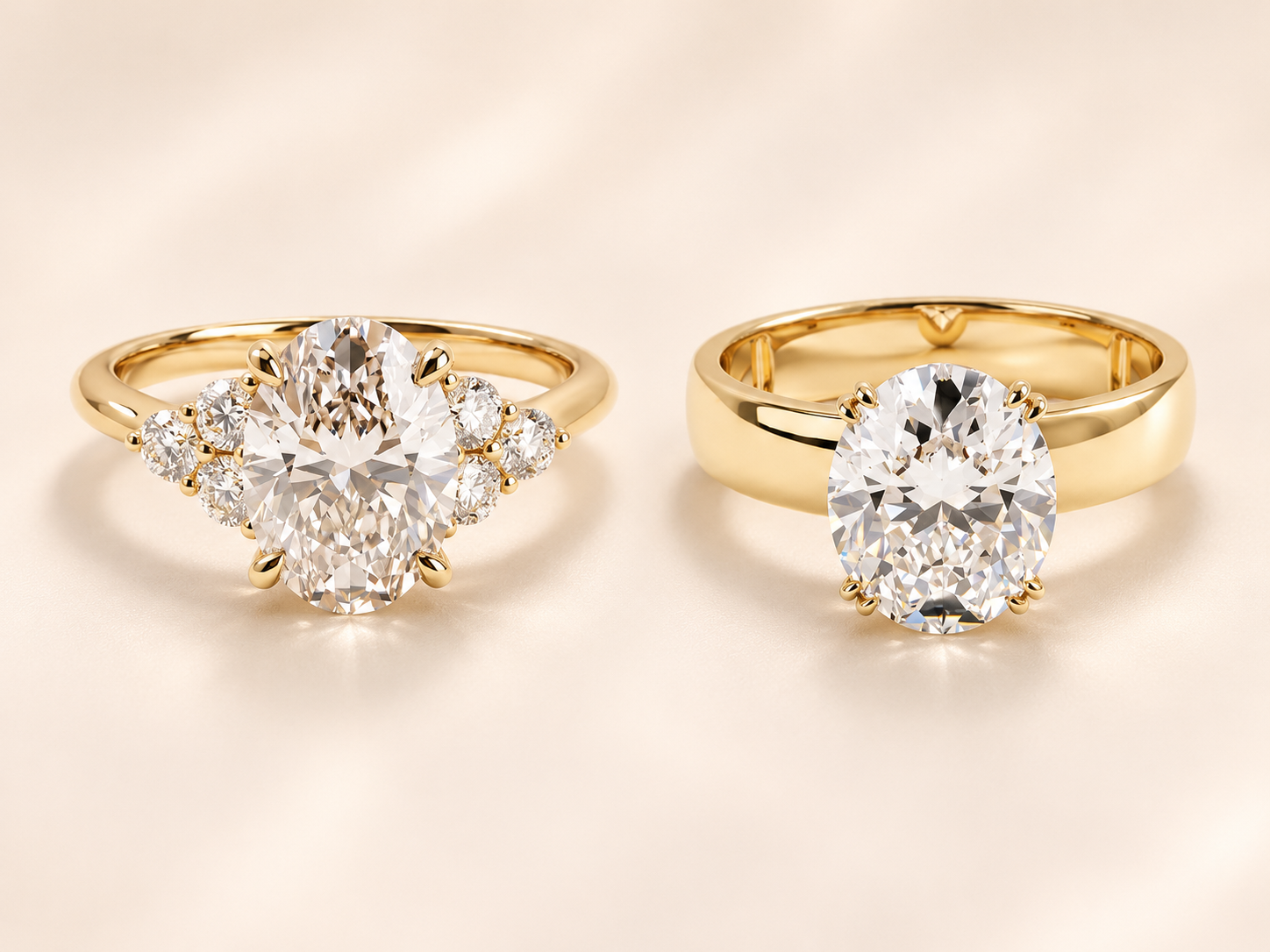
Delilah suits someone drawn to romantic floral accents and sparkle surrounding the center diamond.
Elvina emphasizes one oval diamond, while its bold cigar band proves that solitaire rings aren't always delicate.
Important: Even their listed 1.00ct center stones have different millimeter dimensions. The promotional photos also feature different carat sizes, so don't attribute every visual difference to the setting alone.
Before ordering, confirm the expected diamond dimensions for your chosen option with Leonids. The final diamond measurements and specifications are more reliable than promotional photos when evaluating actual size.
Find Your Style at Leonids
Ultimately, choosing between a cluster ring and a solitaire comes down to your personal style, budget, and lifestyle. Cluster rings offer intricate details and layered sparkle, while solitaire rings highlight the timeless beauty of a single diamond. Neither is automatically better—the right choice balances visual appeal, comfort, and long-term wearability.
Still deciding? Explore Leonids' Cluster Engagement Rings and Solitaire Engagement Rings side by side. Compare your preferred diamond shape, carat weight, metal, and setting details to find the ring that best reflects your love story.