

Key Takeaways:
- Color: White gold has a cool, silvery shine; yellow gold has a warm, golden glow
- Durability: White gold is harder and more scratch-resistant; yellow gold is softer, especially at higher karats
- Price: White gold costs slightly more due to rhodium plating ($50-100 every 1-3 years for replating)
- Maintenance: White gold needs periodic replating; yellow gold just needs regular polishing
If you're deciding between the two, this guide dives straight into what makes each unique and helps you choose the perfect metal for your style, budget, and lifestyle.
IN THIS GUIDE:
- What’s the Real Difference?
- White Gold vs. Yellow Gold Pros & Cons
- White Gold or Yellow Gold with Diamonds?
- Which is better for you?
- Caring for white gold vs yellow gold
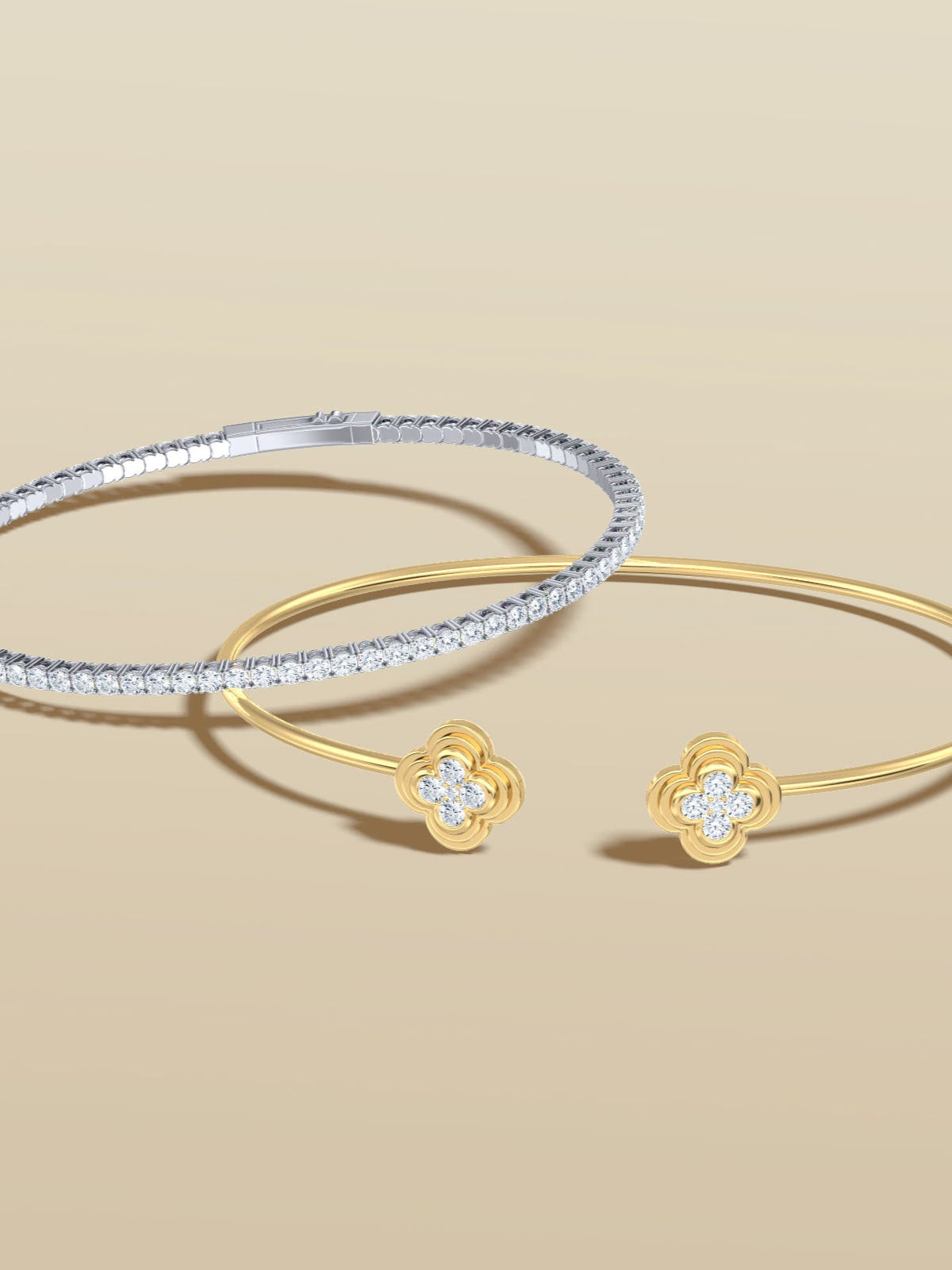
Why yellow gold is "yellow" and white gold is "white"?
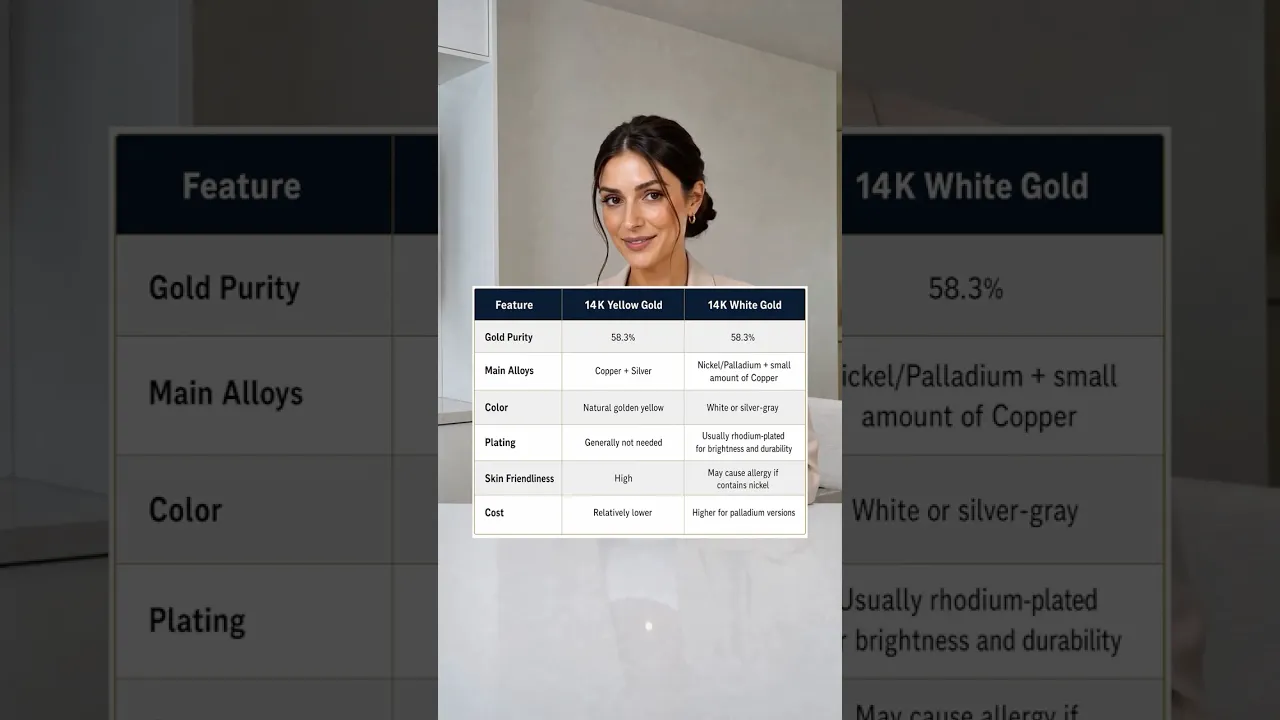
Yellow gold’s warm, yellow tone comes from blending copper and silver with pure gold. White gold mixes metals like palladium(hello, nickel-free options!) or nickel to create a cooler, silvery tone, then gets a rhodium finish for extra shine and scratch resistance (just need to get replated every few years). That extra step means white gold often costs slightly more upfront.
Summary: White gold offers a modern, silvery appearance with superior scratch resistance, but requires rhodium replating every 1-3 years (typically $50-100). Yellow gold provides a classic, warm aesthetic that's generally more affordable and lower maintenance, though it's softer and more prone to scratches at higher karats. Both metals are available in 10K, 14K, and 18K options, with 14K offering the best balance of durability and value.
White Gold vs. Yellow Gold Comparison
| Feature | White Gold | Yellow Gold |
|---|---|---|
| Look | Cool, silvery shine | Warm, golden glow |
| Strength | Harder and more scratch-resistant (thanks to alloys & plating) | Softer (especially in higher karats 18K+) |
| Maintenance | Needs re-plating every 1-3 years | Just polish to keep it shiny |
| Allergies | May contain nickel (opt for nickel-free white gold if sensitive) | Usually hypoallergenic (especially 18K+) |
| Price | A bit pricier (extra plating & alloys) | Often more affordable |
| Best For | Modern styles, makes diamonds pop, more durable | Classic looks, warm skin tones |
What’s the Real Difference?
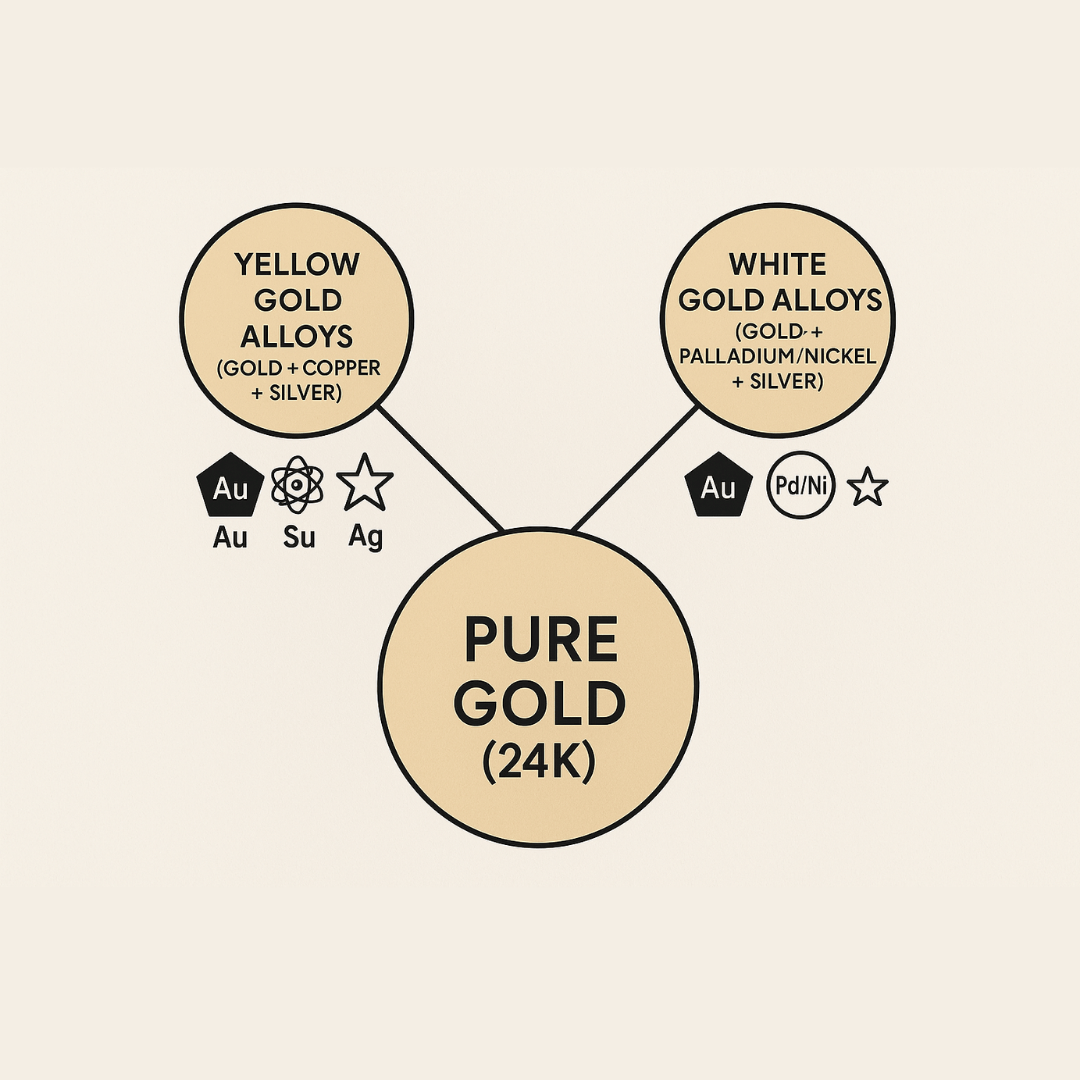
1. How They’re Made
Pure gold, aka 24 karat (24K) gold, is naturally yellow and very malleable. While luxurious, it's generally too soft for jewelry designed to be worn regularly. That’s why jewelers mix or “alloy” them with other metals to make it more sturdy.
Yellow Gold Making:
To create the classic warm glow of yellow gold jewelry, pure gold is typically alloyed with metals like:
- Copper (adds reddish tones and strength)
- Silver (adds paler tones and strength)
- Zinc (adds strength)
White Gold Making:
White gold gets its silvery-white appearance by alloying pure gold with white metals. Common alloys include:
- Palladium
- Nickel (though concerns about allergies nickel-free white gold is becoming popular
- Silver
- Sometimes manganese or platinum.
Most white gold jewelry is then coated with a thin layer of rhodium and get more whiteness and durability.
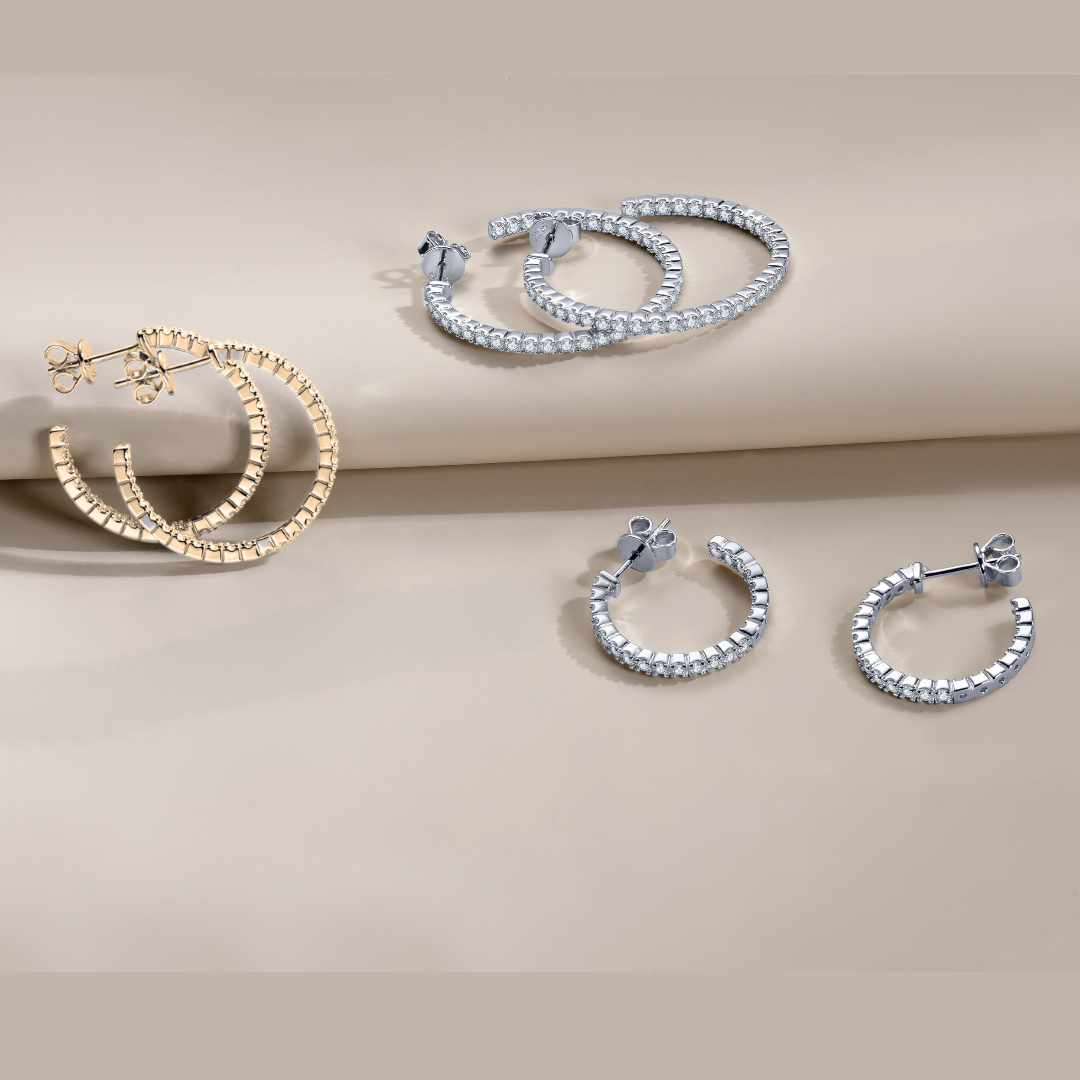
2. Durability and Comfort
How your gold wears over time and how you care for it are key.
Which Gold Wears Better?
White gold: Usually more durable and scratch-resistant than yellow gold. This is especially true for 14K and 10K versions. The harder alloy metals make it stronger. The rhodium plating also adds a protective layer. This is why it’s perfect choice for wedding bands.
Yellow Gold: Naturally a softer metal. Higher karats (like 18K yellow gold) are softer and more prone to scratching and denting than lower karats or white gold.
Allergy Alert: Nickel-Free White Gold
Nickel is a common allergen. If you have sensitive skin, nickel-free white gold is essential.
3. Cost of white gold vs. yellow gold
For comparable karat weights and designs, white gold typically carries a slightly higher price over yellow gold. This is mainly because of 2 reasons:
1. The additional rhodium plating process
2. The potential use of higher-cost alloy metals like palladium
That said, the price variance is generally moderate and can fluctuate based on:
• The specific jeweler
• Particular design elements
• Current metal market conditions
Note: Nickel-free white gold (which uses palladium) might cost a little extra.
Bottom line: If you're watching your budget, 14K gives you the best balance of quality and value.
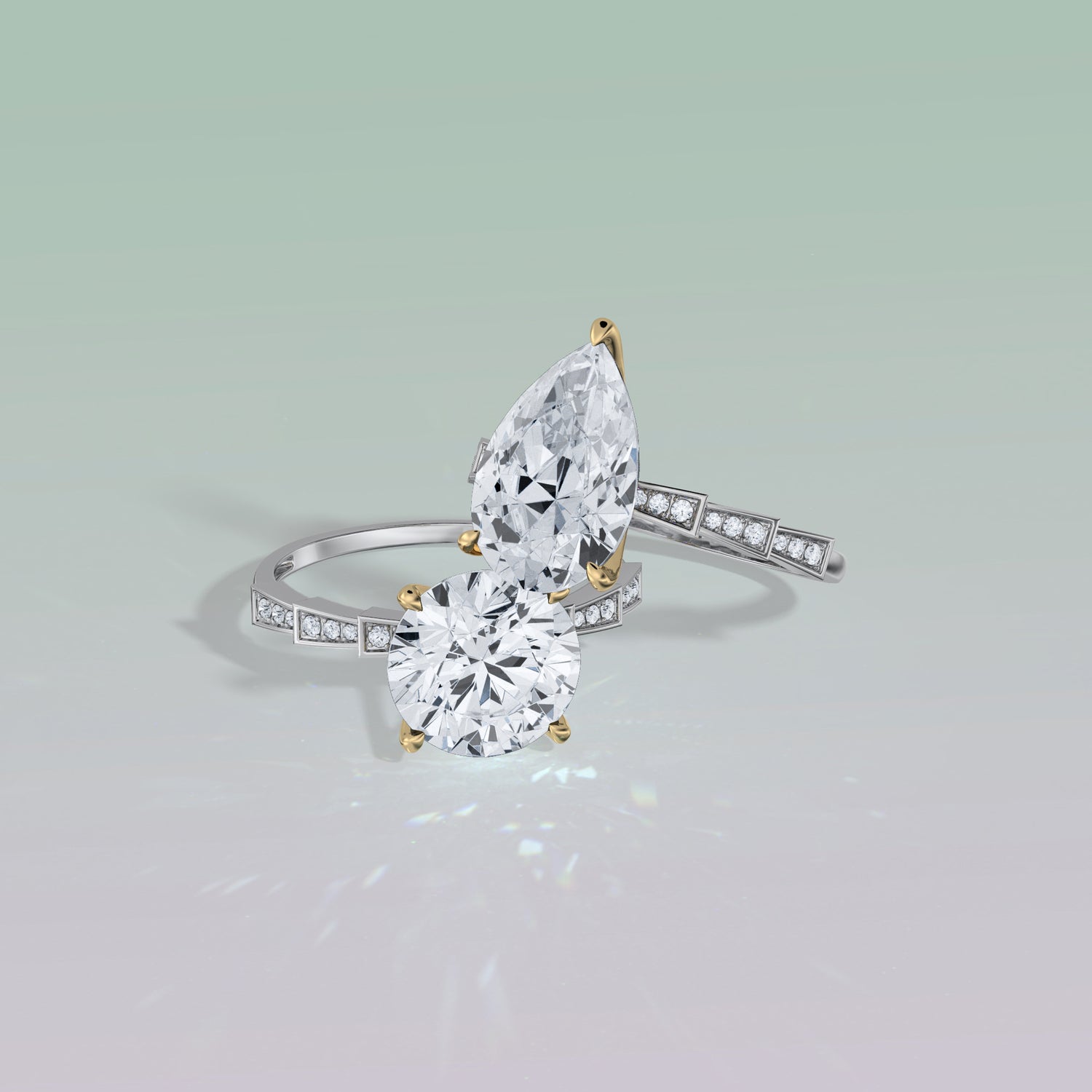
White Gold vs. Yellow Gold for Engagement Rings
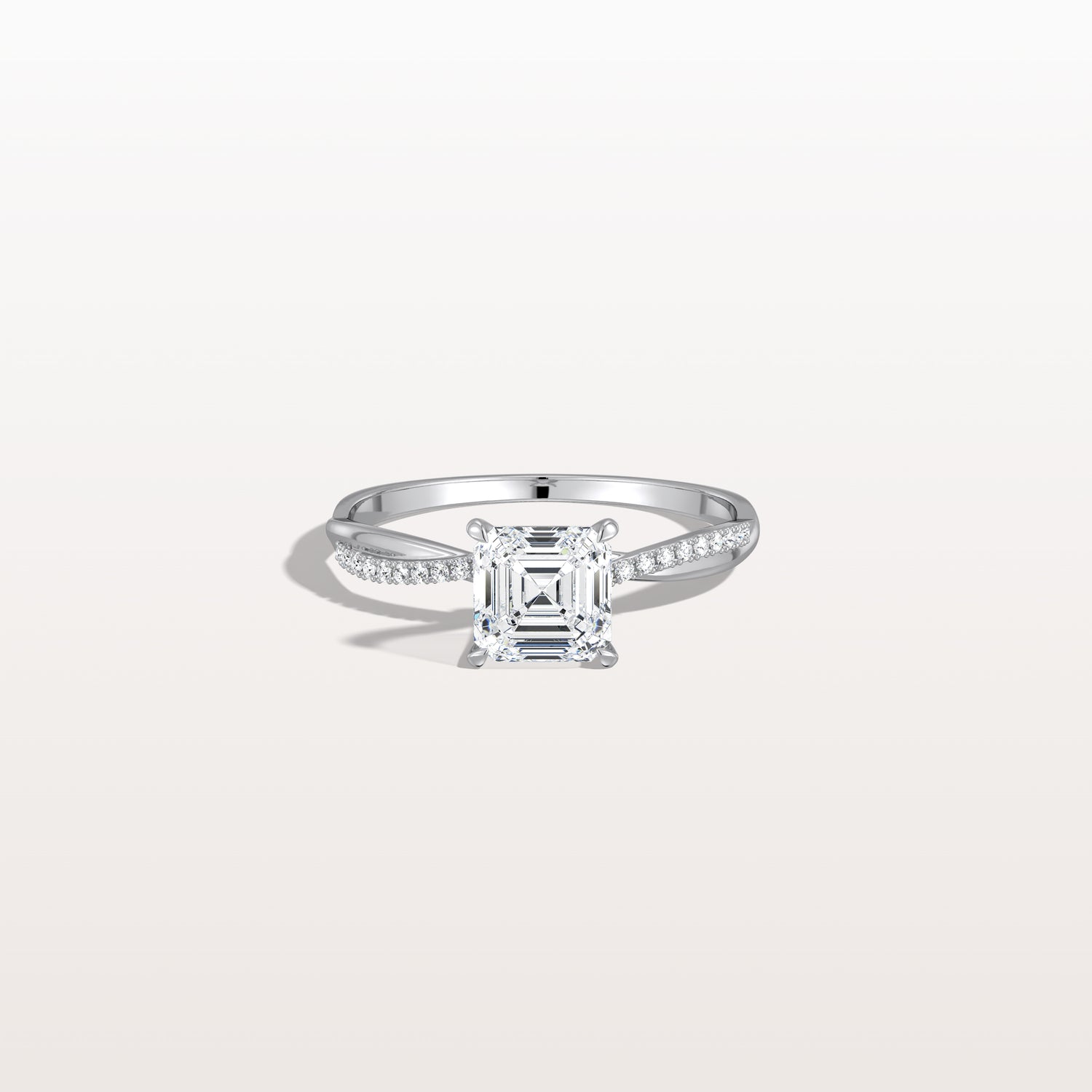
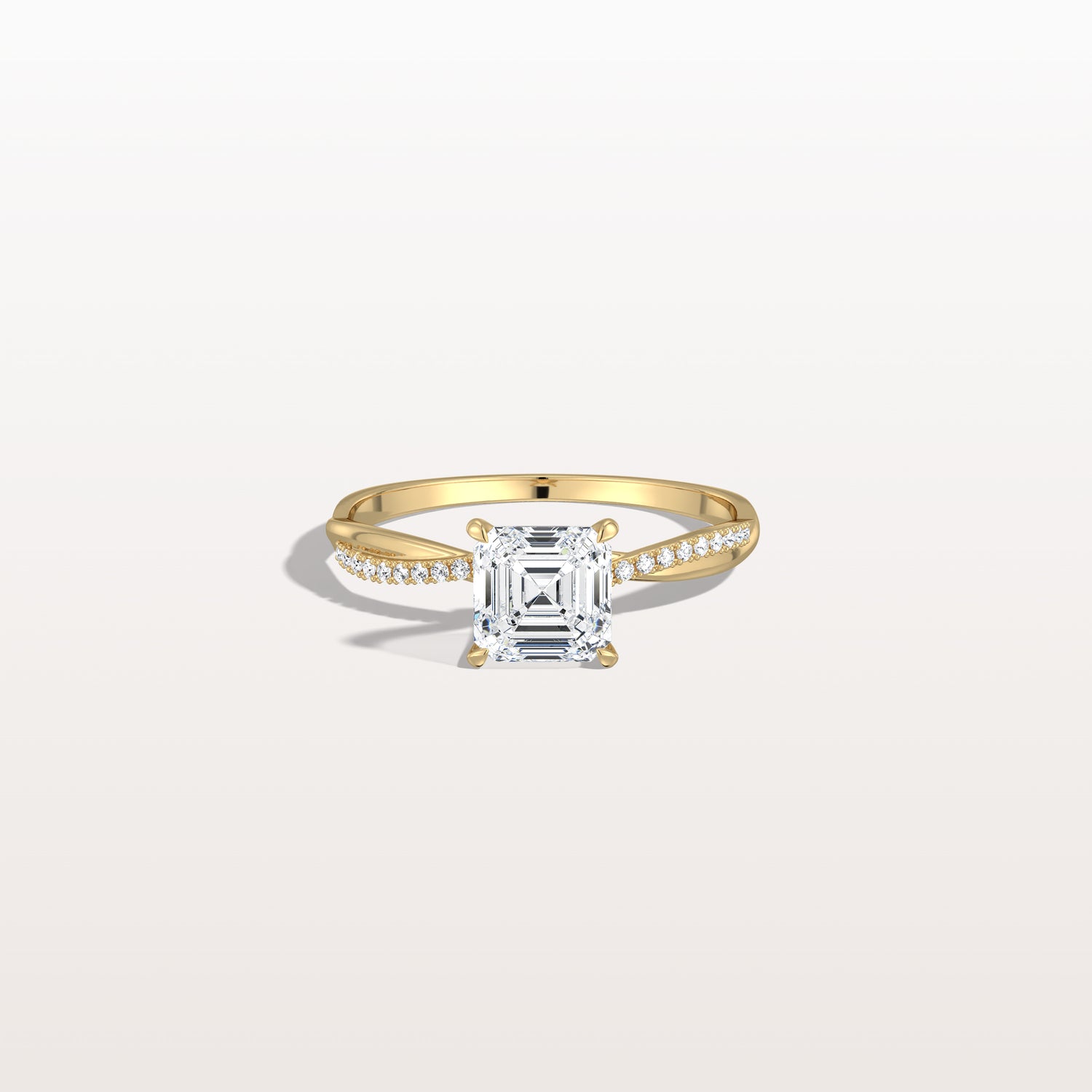
For most couples, white gold is the better choice for engagement rings due to its durability, modern aesthetic, and ability to make diamonds appear brighter. However, yellow gold remains ideal for those who prefer vintage-inspired designs or have warm skin tones.
White Gold Engagement Rings: Give a sleek, modern vibe with a cool shine. Perfect for making colorless diamonds look extra icy and bright (no yellow reflections here). The added durability from rhodium plating makes it ideal for daily wear. That's why it's a go-to for chic engagement rings.
Yellow Gold Engagement Rings: Bring that warm, classic feel. They pair amazingly with vintage-style designs and can even make slightly yellow-toned diamonds appear whiter by contrast. Yellow gold also requires less maintenance since there's no replating needed.
Our Recommendation: For engagement rings, 14K white gold offers the best combination of durability, diamond enhancement, and value. If your partner prefers classic styles or has warm-toned skin, 14K yellow gold is equally beautiful and more budget-friendly long-term.
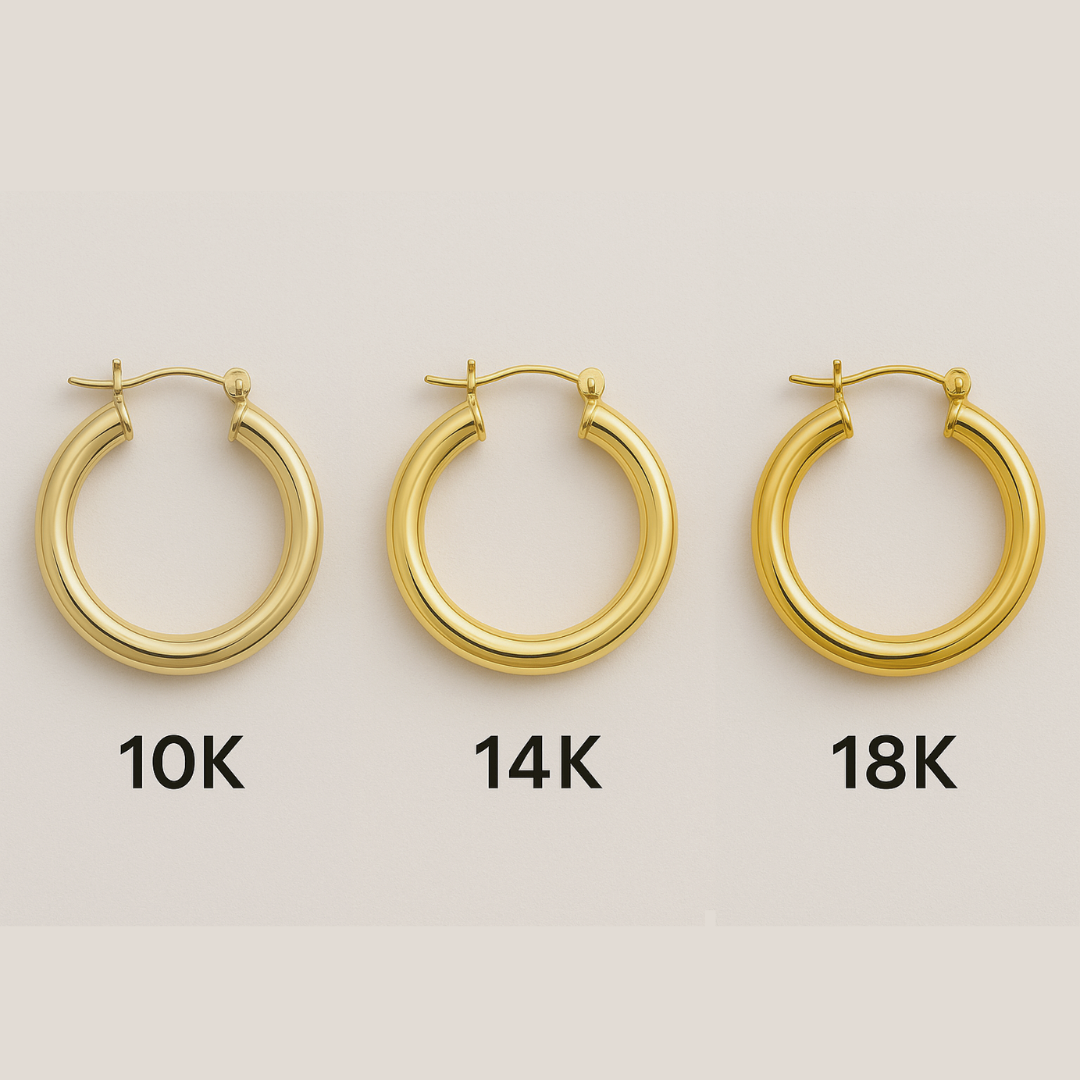
How Karat Weight (10K, 14K, 18K) Impacts Hue & Price
24K Gold: 100% pure gold (too soft for most jewelry).
18K Gold: 75% pure gold, 25% other metals.
- Yellow Gold: Rich, deep yellow. Generally the most valued for its high gold content and vibrant color.
- White Gold: Luxurious, bright white (when rhodium plated).
14K Gold: 58.3% pure gold, 41.7% other metals.
- Yellow Gold: A slightly lighter, bright yellow. A popular choice for its balance of durability, color, and affordability.
- White Gold: Excellent white color, very durable. The most popular choice in the U.S. for engagement rings.
10K Gold: 41.7% pure gold, 58.3% other metals.
- Yellow Gold: Paler yellow. Very durable and more affordable.
- White Gold: Still offers a good white look, highly durable and budget-friendly.
Bottom line: Higher karat weights mean a richer gold color (for yellow gold) and a higher price because of more pure gold content.
So, White Gold vs. Yellow Gold: Which is Better For You?
So is white gold worth more than yellow gold or vice versa?
There's no clear "winner" here – it really comes down to what matters most to you:
Consider these:
- Price: White gold is slightly more pricey and it also might need re-plating down the road.
- Value: For both white and yellow gold, 14K offers a great balance of gold content, durability, and price.
- Craftsmanship: A well-made piece in 10K or 14K gold will often look better and last longer than a poorly made 18K piece.
Your Personal Style:
Skin Tone
- Cool skin tones (pink, red, or blue undertones): White gold, silver, and platinum make your natural glow pop.
- Warm skin tones (yellow, peachy, or golden undertones): Yellow gold, rose gold, and copper bring out that sun-kissed radiance.
- Neutral skin tones:You hit the jackpot!Both white and yellow gold look amazing on you.
Lifestyle
If you're super active or tough on your jewelry, white gold (especially 14K) could handle your lifestyle better.
The best way to know for sure is: try them on! See which color makes your skin glow.
If you’re also trying to compare gold to sterling silver, we have a complete guide on gold vs silver jewelry that explains how these metals differ in durability, price, and long-term maintenance
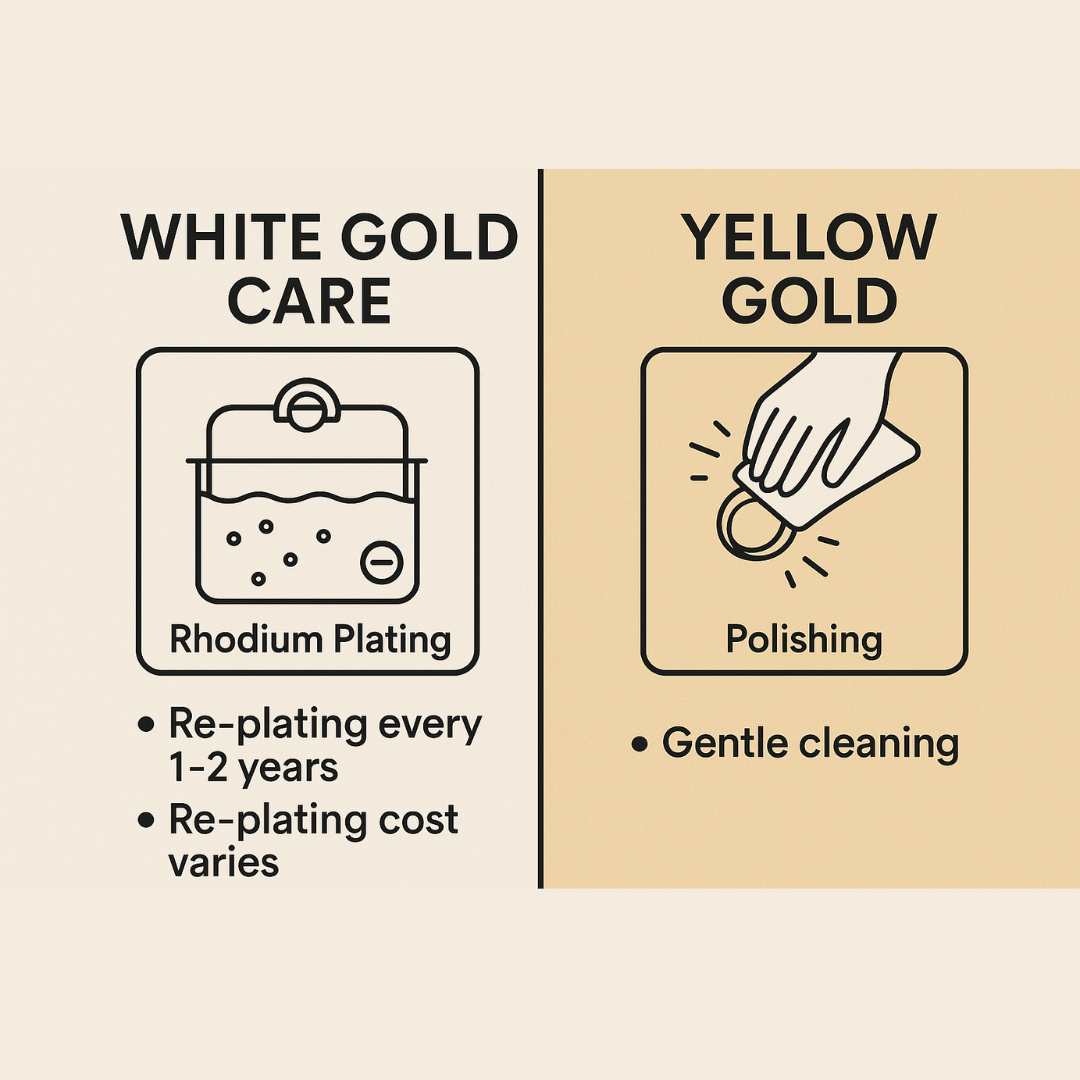
How to Care for White Gold vs. Yellow Gold
Proper care extends the life and beauty of your gold jewelry. Here's what each type needs:
White Gold Care:
- Cleaning: Regular gentle cleaning with mild soap, warm water, and a soft cloth or soft-bristled toothbrush for crevices.
- Re-plating: Professional rhodium replating every 1-3 years to maintain its bright white luster (typically costs $50-100).
- Storage: Store separately from other jewelry to prevent scratches.
- Avoid: Chlorine, harsh chemicals, and abrasive cleaners that can damage the rhodium coating.
- Professional servicing: Have your jeweler inspect prongs and settings annually, especially for engagement rings.
Yellow Gold Care:
- Cleaning: Clean regularly with mild soap, warm water, and a soft cloth.
- Polishing: Polish periodically to prevent tarnish and maintain shine.
- Storage: Store pieces separately in soft pouches or lined jewelry boxes.
- Avoid: Chlorine, harsh cleaners, and wearing during activities that may cause scratches.
- Professional servicing: Annual cleaning and inspection recommended.
When to Seek Professional Help: Take your gold jewelry to a professional jeweler if you notice loose stones, bent prongs, deep scratches, or significant dulling that home cleaning can't address.
Sources: Information in this guide is informed by industry standards from the Gemological Institute of America (GIA) and World Gold Council guidelines on gold alloys and jewelry care.
About the Author: This guide was written by Oggi, our jewelry expert. She has over 10 years of experience in precious metals and gemology.
Our team regularly consults with master jewelers and metallurgists to ensure we provide the most accurate, up-to-date information on jewelry metals and trends.
Last Updated: September 19, 2026
Your Gold Questions Answered (FAQs)
Yes, white gold is usually slightly more expensive due to rhodium plating and premium alloys like palladium. Expect to pay $50-100 for rhodium replating every 1-3 years, which adds to the long-term cost compared to yellow gold.
White gold is pure gold alloyed with white metals (palladium or nickel) and coated in rhodium for a silvery finish. Yellow gold is pure gold alloyed with copper and silver, retaining gold's natural warm color. White gold is harder and more scratch-resistant; yellow gold is softer but requires less maintenance.
It really depends on your style and needs. White gold jewelry has a modern look and is more scratch-resistant. Yellow gold jewelry gives a warm, classic feel, which is perfect for vintage designs.
Both are fantastic! White gold is trendy for its sleek, modern vibe and diamond-enhancing brightness. Yellow gold offers timeless romance. Consider your partner's style, skin tone, and existing jewelry. 14K strikes the perfect balance of durability and gold content for most.
Plan for every 1–3 years, depending on wear and tear (like how often you wash hands, sweat, or use lotions). Replating typically costs $50-100 at most jewelers. Your jeweler can give personalized advice during cleanings!
Absolutely! Mixed metals are in trend right now. Layer a white gold necklace with a yellow gold bracelet, or try a two-tone engagement ring stack. Effortlessly chic.
It’s a helpful starting point! Cool undertones (pink/red/blue) often go well with white gold, while warm undertones (yellow/peachy/golden) glow with yellow. But rules are meant to be broken—go with what you love.
Yes! It’s pure gold mixed with metals like palladium or nickel to create its silvery tone (and make it sturdy). The karat (14K, 18K) tells you how much pure gold is inside.
Sometimes, yes. Nickel-free versions use pricier palladium instead, which bumps up the cost a bit. But it’s worth it for sensitive skin.
For both white and yellow gold, gentle cleaning with mild soap and warm water is best. Use a soft toothbrush for crevices, and dry thoroughly. Store pieces separately to prevent scratching, and have professional cleanings once or twice yearly.

Free US Shipping

Free One-year Warranty

IGl-Certified Diamonds

Free Ring Resizing

30-Day Free Return

We focus on IGI certified lab grown diamonds, & offer a variety of gemstone options for customers with limited budgets. Pieces are crafted in solid gold 10K~18K or platinum, custom design available. Orders are supported by resizing, warranty, returns, & international shipping services.

- Choosing a selection results in a full page refresh.
- Opens in a new window.