Last Updated: September 28, 2026
Hidden Halo Engagement Rings: Why They're So Popular in 2026
A buyer's guide to the secret sparkle trend -- what it is, pros and cons, best shapes, costs, and how to choose.
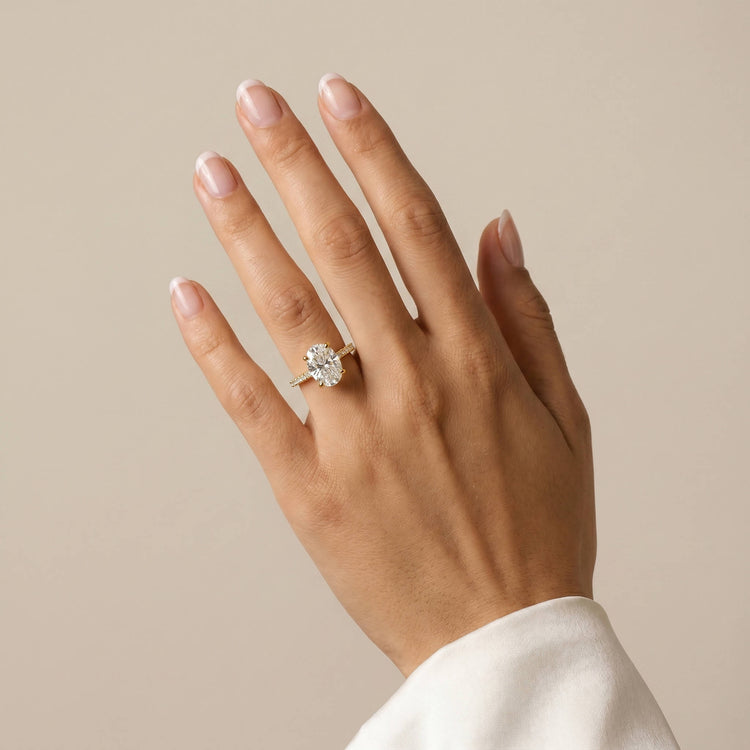
If you have spent any time browsing engagement rings recently, you have likely encountered the term "hidden halo." It is one of the fastest-rising trends in bridal jewelry. A hidden halo adds small diamonds beneath the center stone. It suits buyers who want a simple face-up view with more detail from the side. Check the full design before you choose, including its height and wedding band fit. [9] [16]
But is a hidden halo right for you? How much does it cost? Does it affect how your wedding band fits? And which diamond shapes work best?
This guide covers everything: definitions, comparisons, costs, diamond shape compatibility, maintenance, and wedding band pairing. For a detailed comparison of hidden halo versus the alternatives, see our hidden halo vs no halo guide.
A quick guide before you choose
A hidden halo adds small diamonds below the center stone. It does not tell you how high the ring sits or whether a wedding band will fit beside it. Start with three checks: the side view, the complete ring price and the fit with your chosen wedding band. Then compare the care each design needs. [9]

What Is a Hidden Halo Engagement Ring?
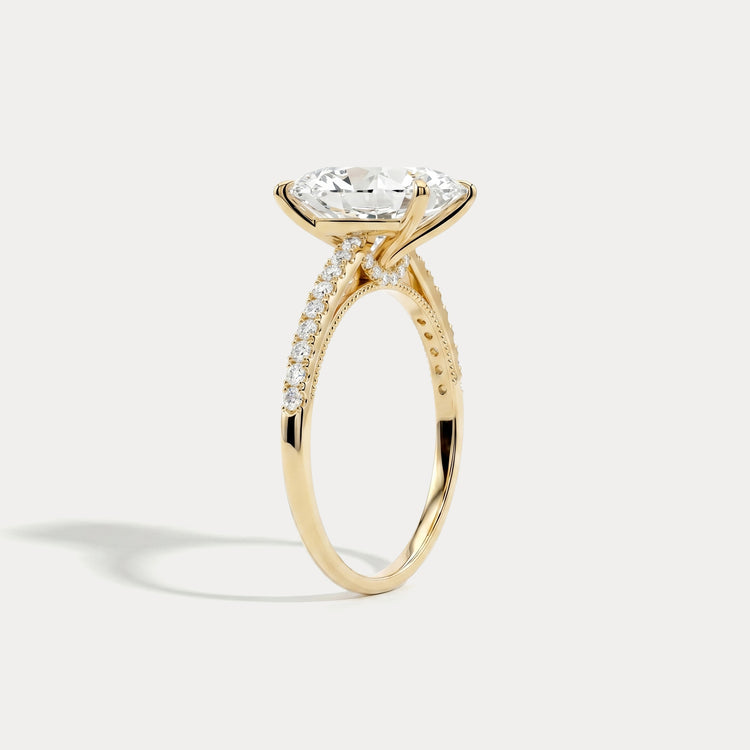
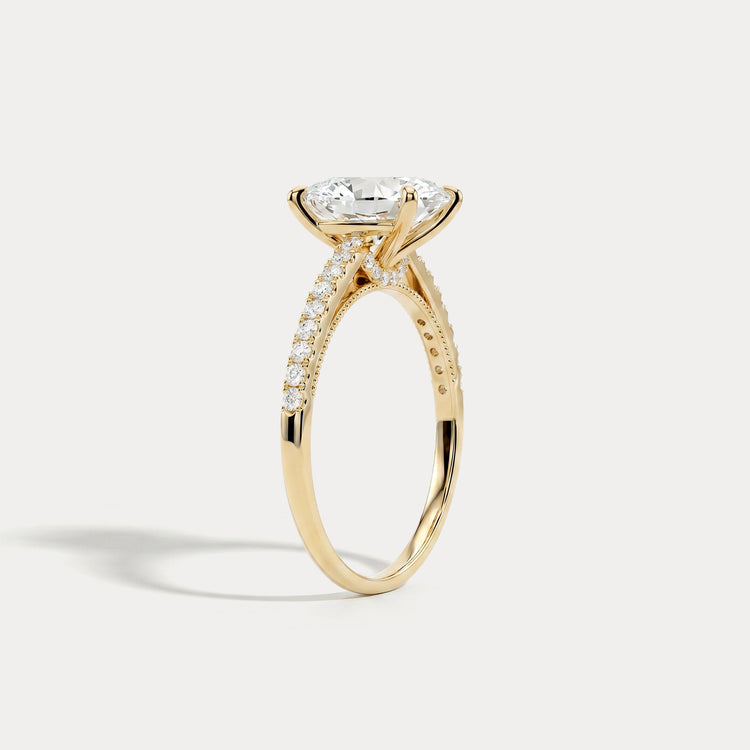
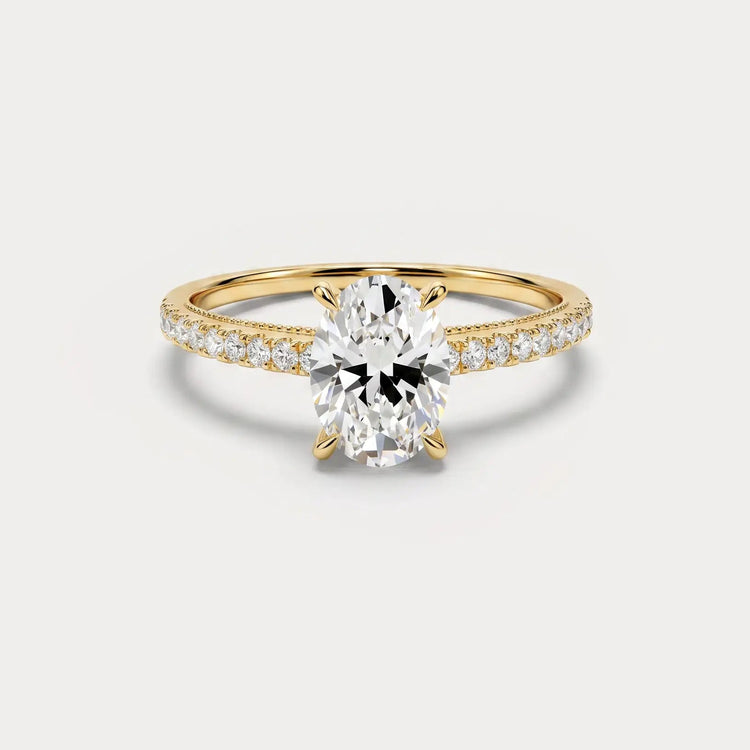
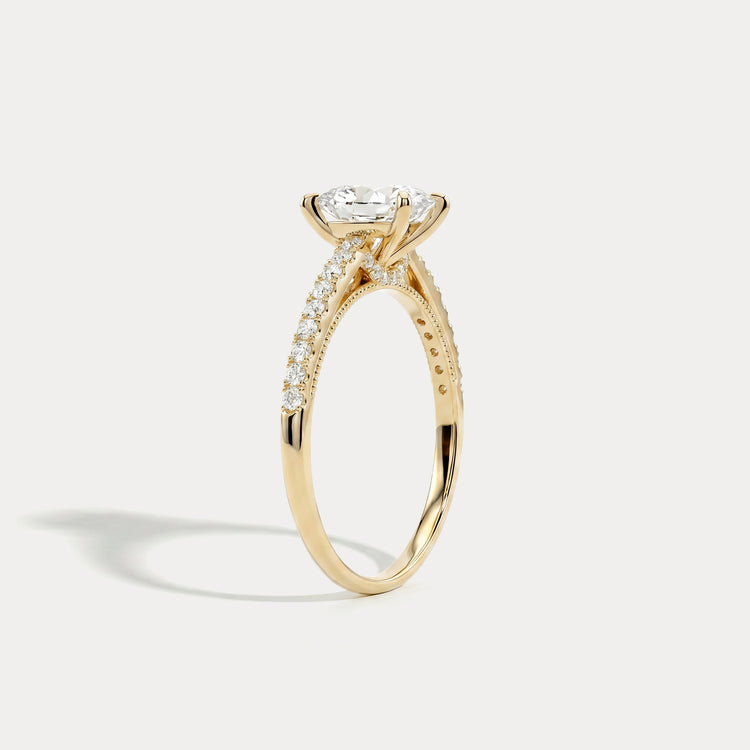
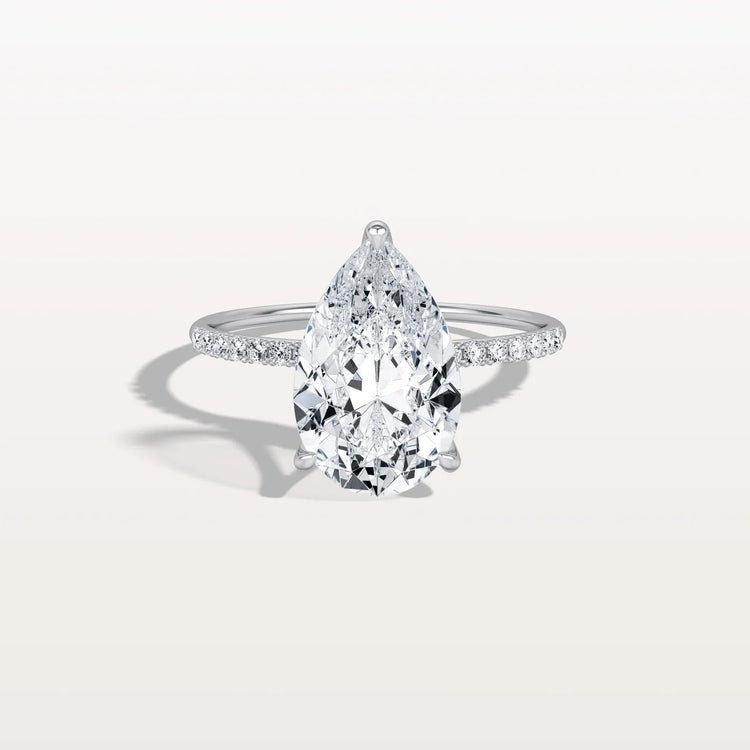
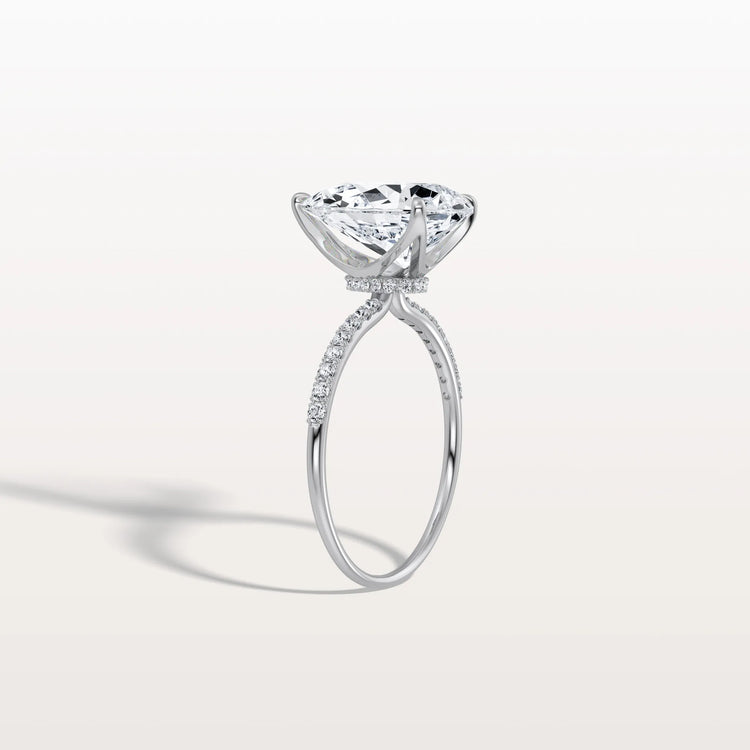
A hidden halo is a row of small diamonds set below the center stone. It usually shows most clearly from the side or at an angle. How much you see from above depends on the halo width, its height and the center stone. [9] [16]
Think of it as a detail you notice as the ring moves. A hidden halo can keep the center stone as the main focus while adding sparkle below it. [9] [16]

How it differs from a traditional halo:
Overall sparkle varies with the diamonds and lighting. The apparent size effect depends on the center stone and halo design. For price comparisons, keep the center stone and metal the same. [R1] [R2] [R9] [R15] [R16]
Hidden Halo vs. Traditional Halo vs. No Halo
A hidden halo usually sits in the gallery below the center stone. Some jewelers use names such as under halo or secret halo. Check the side photos to see the exact placement. Explore our hidden halo engagement rings. [R9] [R16]
Know where the details sit
These details can appear together in one ring. Ask the seller to label them on the same side-view photo.
|
Detail |
What to check |
|
Hidden halo |
A row of small diamonds below the center stone. Check how far the row extends. |
|
Gallery rail |
A metal part of the basket. A rail may carry small diamonds, but a plain rail is not a diamond halo. |
|
Hidden accent |
One or a few small stones placed out of the main top view. This is not always a full halo. |
|
Cathedral shoulders |
Arches that rise from the band toward the center setting. Check where they connect. |
For a full comparison of the main views, see our halo and hidden halo comparison.

The Pros of Choosing a Hidden Halo
Subtle sparkle that does not compete with your center stone.
A traditional halo frames the center stone with visible accents. A hidden halo places the detail lower in the setting. Choose the view you prefer, and compare it with a plain band solitaire. [R1] [R16]
Your ring gains presence and visual weight from the side.
While a hidden halo does not create the "larger face-up" illusion that a traditional halo offers, it does give the ring more visual weight and presence in profile. When light hits the hidden diamonds, the entire setting glows, making the overall ring feel more substantial and custom.
A hidden halo adds detail beneath the center stone. The effect depends on its size, placement and the viewing angle. Compare side videos in normal light to see how much of that detail you notice. [R9] [R16]
Wedding band options depend on the design. [R9]
Some hidden halo rings leave room for a straight wedding band. Others need a curved band or a small gap. Check the basket and halo against the exact band you want. A traditional halo can also allow a straight band when its setting leaves enough space. Compare our classic wedding bands. [R9]

A modern look with timeless appeal.
A hidden halo combines a simple face-up look with detail below the center stone. The style can feel classic or modern depending on the whole ring. Choose a design you enjoy from more than one angle. [R16]
Compare the cost of the exact design.
The added cost depends on the accent stones, metal and setting work. A hidden halo can cost more or less than a visible halo. Ask for two quotes with the same center stone and metal so you can compare the setting detail.
Recommended Hidden Halo Styles by Shape
Oval, round, pear and radiant diamonds offer different looks with a hidden halo. Use the examples below to compare their outlines and side details. [R9]
Oval Hidden Halo
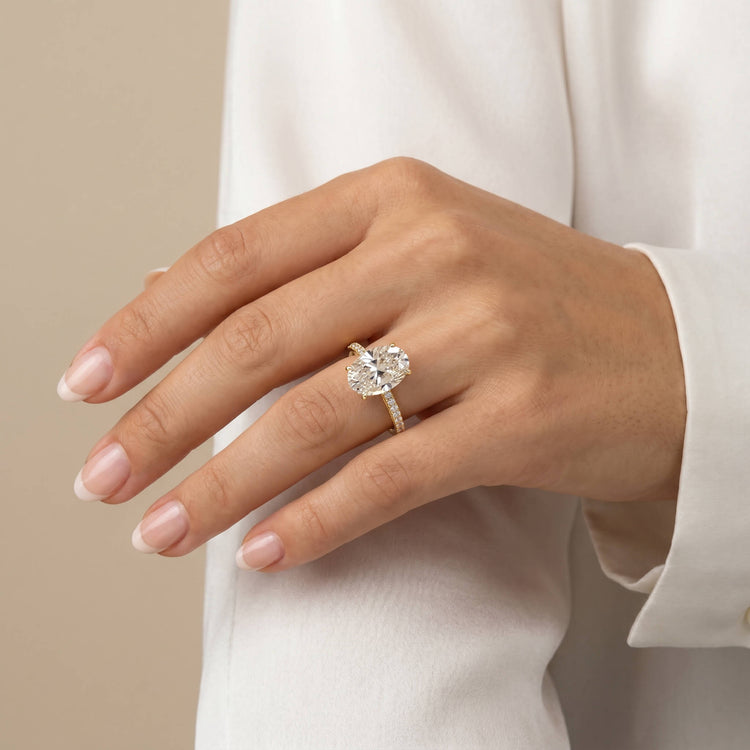
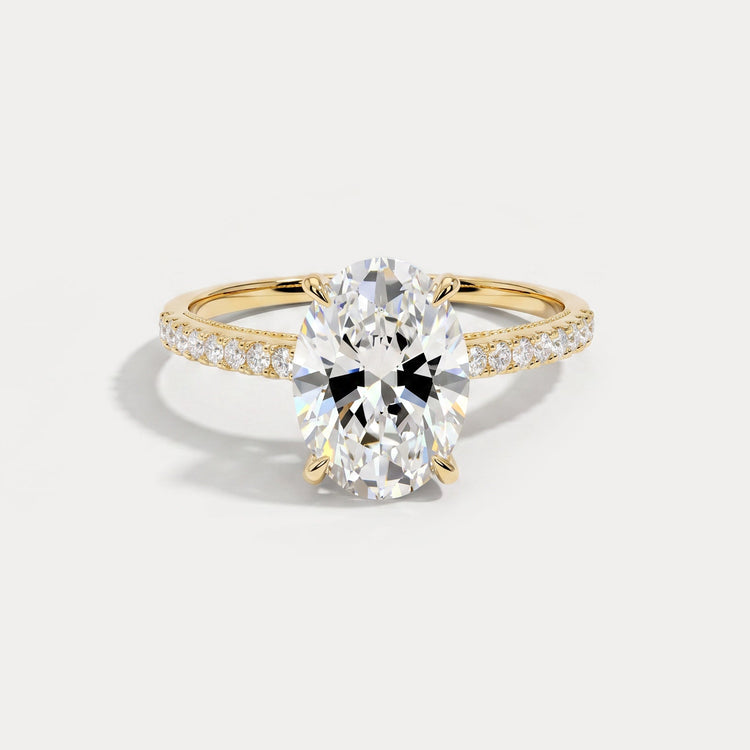
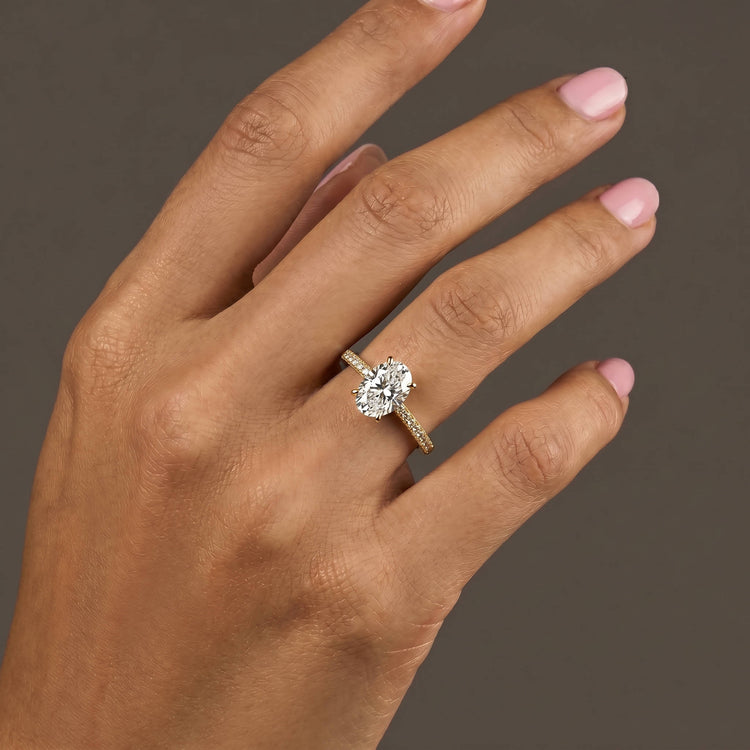
An oval diamond gives the ring a long outline. Its side view depends on the stone depth and setting design. Compare the actual length and width, then view the oval hidden halo. [R9] [R11]

See Melina Oval Hidden Halo Ring
Round Hidden Halo
A round diamond gives the design a balanced outline. The hidden halo can follow a round gallery beneath it. View the side profile and the center diamond in normal light. Browse the round hidden halo. [R1] [R9]

See Liana Round Hidden Halo Ring
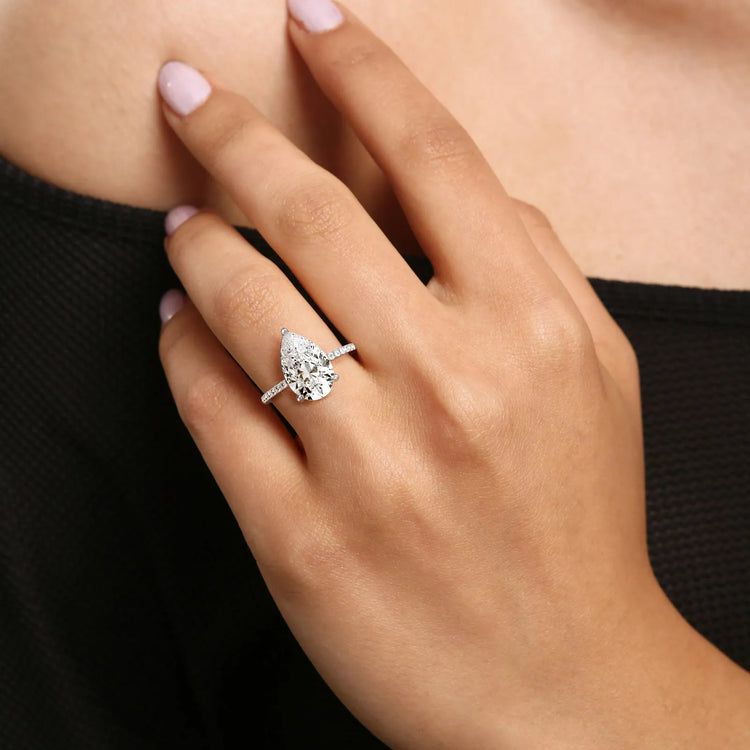
Pear Hidden Halo
For something distinctive. The pear's tapered point creates elegant negative space, and the hidden halo balances the narrower tip while adding sparkle along the curved body. View the pear hidden halo.

See Selene Pear Hidden Halo Ring
Radiant Hidden Halo
A radiant diamond pairs a rectangular or square outline with brilliant-style facets. Check how the hidden halo follows the stone and sits below its corners. Explore the radiant hidden halo. [R1] [R9]

See Amira Radiant Hidden Halo Ring
What to Consider Before Buying a Hidden Halo
Being honest about the trade-offs helps you make a decision you will not regret. Here is what you should know:
Side stones can loosen over time.
Small diamonds can loosen with wear. Ask your jeweler how often to inspect the ring, and have it checked sooner if a stone moves, a prong catches or the ring takes a hard knock. [R1] [R2]
Cleaning requires a bit more attention.
Lotion, soap, and everyday debris can accumulate between the small stones under the center stone. A standard jewelry cleaning cloth may not reach these areas effectively. A quick soak and gentle brushing every couple of weeks typically keeps everything brilliant. For general best practices, care and cleaning guidelines recommend warm water, mild soap, and a soft brush, and advises against harsh chemicals on fine jewelry.
The hidden halo may rub against an adjacent ring.
A hidden halo or its setting may touch the ring beside it. A spacer can reduce some contact, but it must fit the pair. Ask a jeweler to check the contact points. See our low profile engagement ring guide. [R2] [R3] [R9]
What you see from the top is a solitaire.
This is not really a drawback -- it is the entire point of the design. If you want visible sparkle framing your center stone from every angle, a traditional halo is the better choice. The hidden halo reveals itself in moments: gesturing with your hand, turning the ring to the side, catching sunlight through the profile.
Not every jeweler offers hidden halo repair.
Because the hidden halo sits in a tight space under the center stone, resizing or repair work requires more precision than a standard solitaire. Most experienced jewelers can handle it without issue, but it is worth asking your jeweler about their experience with hidden halo settings before you buy. Choosing a retailer that specializes in the style you are purchasing ensures that future maintenance will be straightforward.
Who Might Prefer Another Setting?
A hidden halo is not the right fit for everyone, and being honest about that helps you buy with confidence. You may want to consider another setting if:
-
You want maximum visible sparkle framing the center stone from every angle.
-
You would rather not clean small accent stones periodically.
-
You prefer the cleanest, most minimal look possible.
-
You want the lowest-maintenance option for an active lifestyle.
If any of those describe you, a traditional halo delivers the most face-up sparkle, a solitaire offers timeless minimalism with the least upkeep, and a bezel setting protects the stone best for hands-on, active wear. None of these is better or worse than a hidden halo; they simply prioritize different things.
Hidden Halo vs Other Setting Styles
Beyond the hidden halo vs traditional halo comparison, it helps to understand how the hidden halo compares to other popular setting types:
These features can appear together in one ring. Check the full design and the exact wedding band. [R1] [R9]
Cathedral Hidden Halo Engagement Rings
A cathedral hidden halo ring combines arched shoulders with small diamonds below the center stone. The shoulders and halo serve different roles. The final top view depends on the band and any side stones. [R1] [R9]

Why choose a cathedral hidden halo?
Cathedral shoulders rise from the band toward the center setting. The hidden halo usually follows the gallery below the stone. Its location does not have to match the arches. Check the actual height and side view of the design. [R1] [R9]
Support and durability.
Well-made shoulders that connect to the center setting can add support. Their benefit depends on the joints, metal and full design. A hidden halo still needs care, since its stones and metal can meet knocks or contact from another ring. [R1] [R2]

Wedding band fit.
A cathedral hidden halo may leave room for a straight wedding band, but some designs do not. Compare the space below the basket with the height and shape of your band. Try the two rings together before you choose. [R1] [R9]
If this style appeals to you, see our cathedral hidden halo rings and the full cathedral setting collection.
The cathedral setting with a hidden halo deserves special attention. Cathedral shoulders rise from the shank toward the center setting. Check their connections and the full ring design. Read our cathedral vs solitaire guide, or view the Kaia cathedral hidden halo ring. [R1]
Check height and space for a band
A low profile hidden halo sits close to the finger, but the design still needs room for the stone and its setting. Ask for the overall height in millimeters and confirm where that measurement starts and ends. Band thickness is a different measurement. [R9]
Next, check the space beneath the basket where a wedding band would sit. A ring can feel low on the hand yet leave too little room for a straight band. Use a side-view photo or CAD drawing with the exact band shown beside it. Read our low profile ring guide or cathedral setting guide for the next comparison. [R1] [R9]
For a completely different approach, the bezel setting wraps the center stone in a metal rim for a sleek, secure, ultra-modern look -- see our guide to the types of bezel settings.
Best Diamond Shapes for Hidden Halo Settings
Many diamond shapes can work with a hidden halo. The setter must allow for the actual stone depth, outline, prongs and space below the center. Use the table as a design checklist, not a ranking. [R1] [R9]
|
Check the oval’s length, width and depth, then view the halo placement. See the Lucia oval hidden halo. |
||
|
A round outline can pair with a round halo below the stone. Check the prong layout and view the Liana hidden halo ring. |
||
|
Check the pointed end, the prongs and the halo clearance. View the side profile of the actual ring. |
||
|
Check how the halo follows the radiant outline and clears the corner prongs. View the Callie radiant hidden halo. |
||
|
Check the actual pavilion depth and basket shape. The hidden halo adds side detail beside the emerald cut’s step facets. Explore our emerald cut engagement rings. |
||
|
Cushion depths and outlines vary. Match the halo to the actual stone. Choose the center facet pattern for the flashes you enjoy, then check the side design. |
||
|
Compare the actual stone dimensions, corner prongs and halo placement. View the side profile and the contrast between the step facets and halo accents. |
||
|
Check both pointed ends, the prongs and the halo clearance. Compare the actual side view and decide how much detail you prefer. |
||
|
Check how the corners are protected and how the halo clears the prongs. Ask the jeweler to confirm the design for the specific stone. |
Shape alone does not establish compatibility. Ask the jeweler to confirm the setting for the actual stone dimensions and the intended wedding band. [R1] [R2] [R9] [R11]
For an oval hidden halo, compare the center stone’s length, width and depth. Then view the ring from the side. These checks tell you more than carat weight alone. [R7] [R11]
A round hidden halo can follow a circular path beneath the stone. From the side, you see only part of that path. View the ring as it turns. Our mm to carat guide explains why weight and measurements are different. [R7]
Choose the stone and setting together
Compare the center diamond’s length, width and depth in millimeters. Two diamonds with the same carat weight can have different measurements. Check how the halo fits around the actual stone, including the corners or pointed ends. [R2] [R7]
For an oval design, use our oval hidden halo guide. For an elongated cushion hidden halo, ask Leonids to confirm the available design, price and production time before ordering. Do not assume every shape is offered in every setting. [R9]
Hidden Halo Cost Comparison
|
Setting |
Accent stones |
Typical added cost* |
vs Solitaire |
|
Solitaire (no halo) |
None |
$0 (baseline) |
-- |
|
Single hidden halo |
12-20 |
$200-$600 |
Small step up |
|
Double hidden halo |
24-40 |
$300-$800 |
Moderate step up |
|
Traditional halo |
30-50+ |
$500-$1,200 |
Largest step up |
A hidden halo typically adds $200 to $600 to the price of a ring compared to a plain solitaire setting. The exact figure depends on how many accent diamonds are used, their quality, and the metal you choose. A standard single hidden halo uses 12 to 20 small diamonds; a double hidden halo uses 24 to 40 and adds $300 to $800. This is meaningfully less than a traditional halo, which uses 30 to 50 or more accent stones and often adds $500 to $1,200.
First, what a lab-grown diamond actually is.
Lab grown diamonds are real diamonds with essentially the same chemical composition, crystal structure and optical and physical properties as natural diamonds. They grow through HPHT or CVD methods. A laboratory can identify their origin. IGI reports include 4Cs information. GIA’s current service for eligible colorless to near-colorless lab grown diamonds uses Premium or Standard. Check the lab, report type and date. [R4] [R5] [R6] [R7]
Because they are produced rather than mined, lab-grown diamonds typically cost significantly less than mined diamonds of comparable size and quality. That price difference is what makes setting choices like the hidden halo so accessible.
Why a lab-grown diamond makes a hidden halo especially affordable.
Because a lab-grown center stone costs a fraction of a mined diamond of the same size and quality, lab-grown buyers can often add a hidden halo or even upgrade to a double hidden halo and still spend less overall than they would on a plain-solitaire mined diamond. In practice, the money you save on the center stone more than covers the cost of the setting detail. This is why the hidden halo has become one of the most popular settings among lab-grown shoppers: it delivers a custom, elevated look without pushing the total budget higher. If you are weighing where to spend, putting a lab-grown diamond in a hidden halo setting is one of the best value combinations available.
As a rough guide, a 1 carat lab-grown round diamond in a hidden halo setting often lands well under the cost of a comparable mined solitaire, leaving room in the budget for a higher color or clarity grade. Buyers focused on value should compare the total ring price, not just the setting upcharge, when deciding between styles.
*Added cost is for the setting detail only and varies with metal and diamond quality. Verify against current Leonids pricing. Because a lab-grown center stone costs far less than a comparable mined diamond, lab-grown buyers can usually add a hidden halo and still pay less overall than a mined solitaire.
Compare complete quotes
Ask each seller to quote the same details. A setting-only price does not include the center stone. A ring price may also change with metal, size or custom work.
|
Quote field |
What to record |
|
Center diamond |
Origin, shape, carat weight, millimeter measurements and stated quality. |
|
Accent diamonds |
Their origin, placement and total accent weight. |
|
Metal and size |
Metal type, gold purity where relevant, and ring size. |
|
Setting details |
Single or double halo, band accents and any custom changes. |
|
Total and date |
Complete ring price, currency, quote date and any applicable delivery charges or taxes. |
Keep center carat weight separate from total carat weight, or CTW. For example, a 2.00 ct center plus 0.20 ct of accents totals 2.20 CTW. The center is still 2.00 ct. This is a calculation example, not a Leonids product specification.
Double Hidden Halos and Advanced Variations
A double hidden halo has two rows of small diamonds below the center stone. Their position and spacing vary by design. Ask for a clear side view, the total accent weight and a quote for the exact ring. [R9]

See Talia double hidden halo rings
Some rings place diamonds on the bridge as well as around the gallery. These details may show from the side or at an angle. Ask which row is the hidden halo and where the other accents sit. [R9]
Hidden Halo and Wedding Band Pairing
One of the most common questions buyers ask: will a wedding band sit flush with a hidden halo ring?
The answer is typically yes -- and this is a major reason hidden halos have become so popular.
The basket, bridge or hidden halo can meet the side of a wedding band. A straight band fits beside some designs, while others need a gap or curve. Compare your chosen ring with the classic wedding band you plan to wear. [R9]

When you might need a curved or contoured band:
- If the engagement ring's center stone is set very low, the basket or gallery may extend slightly outward beyond the band width
- If the hidden halo design uses an unusually wide gallery that protrudes past the shank
- If the ring has additional side detailing at the band level, such as pave diamonds on the bridge
For most standard hidden halo designs, flush fit with a straight band is the default. This is one of the key reasons buyers choose hidden halo over traditional halo -- it gives you the freedom to pair almost any wedding band style without worrying about fit.
Spacer bands: A spacer band can reduce some contact between two rings. It does not remove all wear risk. Its width, thickness and shape must suit the pair. Ask a jeweler to check the new contact points and confirm the price. [R2] [R3]
Check the two rings together
Flush fit means two rings sit closely together without a visible gap at the band. It does not prove that their stones and metal avoid harmful contact. Use these checks with the exact pair you plan to wear. [R2] [R3] [R9]
- Ask for side and top photos with both rings in place.
- Record the wedding band’s width and thickness. Check its raised stones too.
- Look for contact with the basket, halo diamonds, prongs or bridge.
- Ask the jeweler to check what happens when the rings rotate or shift during wear. Do not force them together.
- Compare a straight band, a curved band or a small gap. If using a spacer, check its contact points as well.
A CAD drawing can help plan the pair. Confirm the finished fit too, since the final stone position and metal finish matter.
Lab Grown Diamonds and Hidden Halos
If you are shopping for a lab grown diamond engagement ring, a hidden halo is a particularly smart combination. Here is why:
Lab grown diamonds often cost less than natural diamonds of comparable size and quality. The difference changes with the stone and seller. Compare full quotes to see how much remains for the setting. For metal choices, read our yellow gold vs white gold guide. [R4]
Leonids uses lab grown diamonds in its hidden halo rings. Check the product page for the metal and accent details. Each center diamond of 0.5 ct or more comes with an IGI report. For made to order rings, we provide the final report number after shipping. Small accent diamonds do not each receive a separate IGI report. [R9] [R10] [R11] [R12]

Read the report for the center diamond
An IGI diamond report describes the stone named on that report. It lists details such as origin, shape, weight and measurements. It is not a promise that a wedding band will fit, or that every small halo diamond has its own report. [R7]
At Leonids, center diamonds of 0.5 ct or more come with an IGI report. For made to order rings, the final report number is provided after shipping. Before ordering, confirm the agreed diamond details. Once you receive the number, use IGI Report Verification to check it. [R8] [R10] [R11]
Care and Maintenance for Hidden Halo Rings
Daily wear: Hidden halo rings are durable enough for everyday wear. The accent diamonds are protected by their position under the center stone, shielding them from direct impacts. Remove your ring during activities like weightlifting, gardening, or any task involving harsh chemicals.
Cleaning at home: Soak the ring in warm water with a drop of mild dish soap for 10 to 15 minutes. Use a soft baby toothbrush to gently clean around the gallery and between the hidden halo stones. Rinse thoroughly and dry with a lint-free microfiber cloth. Avoid toothpaste, bleach, and abrasive cleaners.

Professional maintenance: Have your ring inspected by a jeweler every 6 to 12 months. Most jewelers offer complimentary inspections.
Ask a jeweler before using an ultrasonic or steam cleaner. Loose stones, some treatments and other materials in the ring can change which cleaning method is safe. A jeweler should inspect the whole ring first. [R2]
Insurance: Ask your insurer whether the ring needs separate cover. Check what the policy includes for loss, theft and damage, along with any limit or deductible. Keep the receipt, report and clear photos.
Check the ring before cleaning
Look for a missing accent, a rough prong or a stone that seems to move. Do not test it by pushing the stone. If you notice a change, stop wearing the ring and ask a jeweler to check it. Rinse over a bowl when cleaning, so a small part cannot disappear down a drain. [R2]
How to Choose: A Decision Checklist
Use these questions to compare your needs with the actual ring. Confirm the fit, full price and care requirements before you decide.
1. Do you prefer a clean, classic look from the top-down view? Hidden halos deliver this while adding detail elsewhere. Browse our hidden halo collection
2. Is a flush wedding band fit important to you? Hidden halos make pairing straightforward -- typically no curved or custom band needed.
3. Does your budget allow an extra $200 to $600 for setting details? The hidden halo is an affordable upgrade relative to other custom setting options.
4. Are you choosing an oval, round, pear, or radiant diamond? These four shapes pair best with hidden halos and give you the widest selection of designs.
5. Do you want something modern and subtle rather than bold and traditional? The hidden halo is a contemporary detail that rewards close inspection rather than announcing itself from a distance.
6. Are you comfortable with basic ring maintenance? A quick soak and gentle brushing every couple of weeks keeps the hidden diamonds at their brightest.
7. Are you buying a lab grown diamond? Lab grown buyers can often afford a higher-quality setting within the same total budget, making a hidden halo an especially smart choice. For help choosing between yellow gold or white gold settings, see our metal comparison guide
If you answered yes to most of these, a hidden halo engagement ring is very likely the right choice for you. If you found yourself leaning toward visible sparkle, a traditional halo may be a better match. If maintenance concerns you, consider a solitaire or a bezel setting, both of which keep daily upkeep simple.
Before you place the order
Save the product name, selected metal, ring size, center stone details and agreed design. Ask for a clear top view, side view and the dimensions that matter for your wedding band. Confirm whether the quote includes the whole ring.

Read the current warranty policy for repair and resizing terms, and the return policy for your exact order. Leonids currently provides a one-year warranty for manufacturing defects. Return eligibility varies with destination and order type. Confirm these terms before approving custom work. [R13] [R14]
Ready to explore hidden halo engagement rings? Browse our hidden halo collection, read our hidden halo vs no halo guide, or compare it with our cathedral vs solitaire comparison.
References
[R1] GIA Guide to Engagement Ring Settings
[R2] GIA Diamond Care and Cleaning Guide
[R3] GIA Ring Stacking Guide
[R4] IGI Are Lab Grown Diamonds Real
[R5] GIA Updated Laboratory Grown Diamond Services
[R6] GIA Laboratory Grown Diamond Services
[R7] IGI How to Read an IGI Laboratory Grown Diamond Report
[R8] IGI Verify Your Report
[R9] Leonids Jewelry Hidden Halo Engagement Rings
[R10] Leonids Jewelry What Is a Simulated Diamond
[R11] Leonids Jewelry Lucia 2CT Oval Hidden Halo Ring
[R12] Leonids Jewelry Materials
[R13] Leonids Jewelry Warranty Policy
[R14] Leonids Jewelry Refund Policy
[R15] GIA Engagement Ring Settings That Make Your Diamond Look Bigger
[R16] The Knot Hidden Halo Engagement Ring 101
[R17] Leonids Jewelry Original Hidden Halo Engagement Ring Article
About the Author: This guide was written by Augie, our jewelry expert. She has over 10 years of experience in precious metals and gemology.
Our team regularly consults with master jewelers and metallurgists to ensure we provide the most accurate, up-to-date information on jewelry metals and trends.
Share