How to Choose a Radiant Cut Diamond: Pros, Cons & Size Guide
Quick Answer: Radiant cut diamonds combine lively brilliance with a square or rectangular outline and cropped corners. Their advantages include versatile settings, bright reflections, and distinctive geometric shapes. Potential drawbacks include varying sparkle patterns, darker areas in some stones, and differences in visible size at the same carat weight. To choose one, compare its length-to-width ratio, millimeter measurements, sparkle, clarity, and finished setting—not carat weight alone.
A radiant diamond brings the crisp outline of an emerald cut together with the lively reflections of brilliant-style facets. Yet two radiants labeled 2 carats can look different on the finger, and setting design changes the finished ring even more.
Is a Radiant Cut Diamond Right for You? Pros and Cons
The advantages: Radiant diamonds offer energetic sparkle within a geometric outline. Their cropped corners are less exposed than the pointed corners of a princess cut, although a secure setting is still essential. Elongated radiants can emphasize finger length and work well with solitaires, decorative side accents, and three-stone rings. Busy reflections may also make some inclusions harder to notice.
The disadvantages: Facet arrangements and light performance vary from stone to stone. A crushed-ice pattern can appear lively in one radiant but hazy in another; some diamonds also show distracting dark areas. A highly elongated outline may appear narrower than expected at a given carat weight. Raised settings and exposed accents deserve consideration for everyday comfort.
Should you choose radiant? It is an appealing option if you love rectangular geometry and brilliant-style sparkle. If you prefer a consistently circular outline, consider a round brilliant. If broad, mirror-like flashes appeal more than smaller reflections, an emerald or Asscher step cut may suit you better.
How to Choose a Radiant Cut Diamond in Six Steps
1. Find a Length-to-Width Ratio You Love
The length-to-width ratio describes the outline viewed from above. Divide the longer measurement by the shorter: 8.5 ÷ 6.0 ≈ 1.42. Lower ratios produce a broader rectangle; higher ratios emphasize length.
|
Length-to-Width Ratio |
Typical Appearance |
|
1.20–1.29 |
Slightly elongated rectangle |
|
1.30–1.39 |
Moderately elongated outline |
|
1.40–1.49 |
Clearly elongated silhouette |
|
1.50+ |
Dramatically elongated shape |
These ranges are visual guidelines, not official cut-quality categories. Square radiants also exist, but Leonids' featured engagement ring designs focus on elongated stones. Choose your preferred silhouette before treating a number as a target: a higher ratio does not guarantee greater brilliance or a larger-looking diamond.
2. Compare 1, 2 and 3 Carat Sizes in Millimeters
Carat measures weight, not visible size. Face-up length and width help explain a diamond's scale on the hand. The Amelie design from Leonids publishes these center-stone references:
|
Carat Weight |
Reference Dimensions |
Calculated L/W Ratio |
|
1 carat |
7.0 × 5.0 mm |
1.40 |
|
2 carats |
8.5 × 6.0 mm |
1.42 |
|
3 carats |
9.8 × 7.0 mm |
1.40 |
Source: Amelie product size guide. Measurements are product references, not guaranteed dimensions for every individual diamond.
From 1ct to 2ct, the reference gains 1.5 mm in length and 1.0 mm in width. From 2ct to 3ct, it gains another 1.3 mm in length and 1.0 mm in width. The ratio remains close to 1.40, meaning the outline stays similarly elongated as the reference stone grows.
General carat-to-millimeter charts can show different dimensions for the same weight because they use different proportions. For shopping, prioritize the chosen product's reference measurements and compare images taken at a similar scale.
3. Compare Real Leonids 2 Carat Ring Designs
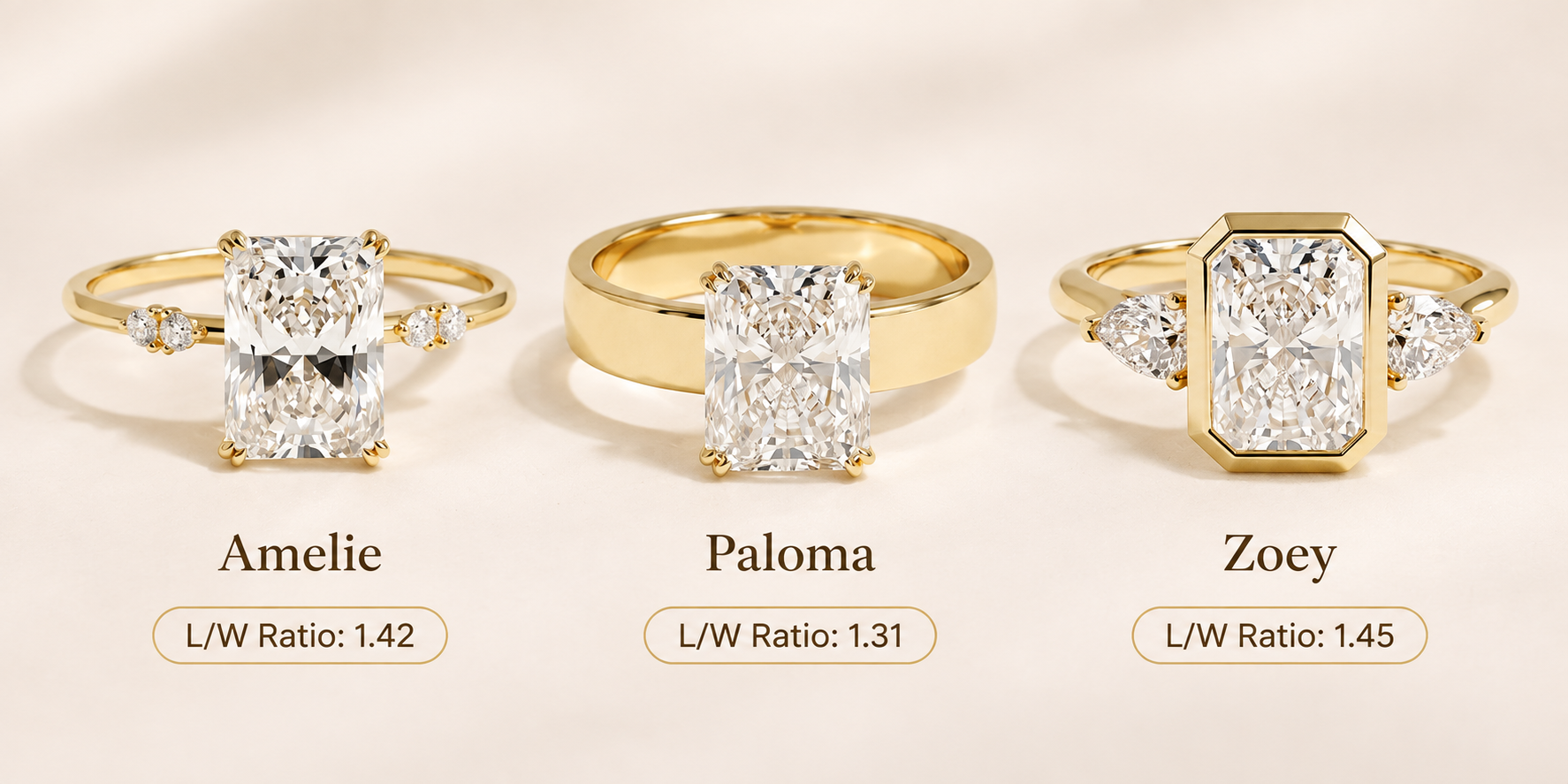
Published Leonids references demonstrate how diamonds with the same stated weight can have distinct outlines:
|
Design |
Published 2ct Center Reference |
L/W Ratio |
Setting Style |
|
8.5 × 6.0 mm |
1.42 |
Four round side accents |
|
|
8.5 × 6.5 mm |
1.31 |
Solitaire with a broad cigar band |
|
|
8.7 × 6.0 mm |
1.45 |
Bezel-framed center with pear side stones |
Ratios are calculated from published reference sizes; individual diamond measurements may vary. Amelie and Paloma product photographs show 3ct examples, while Zoey's show 2ct. The photographs are not a controlled comparison of three 2ct stones.
Paloma: Its 1.31 ratio gives the center a relatively broad rectangle. A substantial cigar band makes the finished ring feel modern and architectural, appealing to shoppers who prefer a minimalist design with noticeable metalwork.
Amelie: Its 1.42 ratio produces a more elongated center. Four round accents add delicate sparkle while keeping the radiant's rectangular outline prominent. It suits someone seeking a balance of geometric shape and romantic detail.
Zoey: Its 1.45 ratio is slightly more elongated, but its reference length is only 0.2 mm greater than Amelie's. The bezel frame and pear side stones may affect the overall look much more than that small measurement difference. Consider it for a distinctive three-stone design.
Key comparison: All three have 2ct reference centers, yet Paloma is broader while Amelie and Zoey are more elongated. Comparing actual millimeter measurements and setting styles is more useful than choosing by carat weight alone. These specifications describe shape, not measured differences in light performance.
4. Judge Sparkle, Not Just a Cut Label
Radiants may show fine, fragmented crushed-ice reflections or larger, more defined flashes. Neither pattern is inherently superior. Look for lively brightness, fire, and appealing contrast when the diamond moves. Some stones show bow-tie-like darkness; mild contrast is normal, but persistent dark patches can be distracting.
Ask whether imagery of the specific center stone is available, since promotional photographs may show only a representative diamond. IGI offers cut assessments for fancy shapes, including radiant diamonds. Always review what the particular grading report evaluates rather than relying solely on a retailer's “Excellent” cut label.
5. Choose a Setting That Fits Your Routine
A solitaire highlights the center diamond. Small side accents provide extra detail; a hidden halo adds sparkle seen from certain angles. A three-stone design adds visual width, while a bezel frames the center in metal and can offer additional edge coverage.
Compare both top-down and side-profile images. A high setting may catch on clothing or sit awkwardly beside a wedding band; a broad band can change how prominent the center looks. Cropped corners reduce exposed points, but they do not make a setting impact-proof.
6. Balance Color, Clarity, and Metal
In general diamond shopping, G–H color and VS2 clarity can be useful starting points, provided the individual stone looks attractive and eye-clean. Higher grades do not always create a noticeable improvement at normal viewing distance.
Leonids' Amelie, Paloma, and Zoey listings specify D–E color and VS clarity. When comparing these designs, carat size, outline, setting, and metal may matter more than hypothetical clarity upgrades. Yellow or rose gold gives a warmer appearance; white gold may need rhodium replating over time. Platinum is naturally white, does not require rhodium replating, and can develop a patina with wear.
Are Radiant Cut Diamonds Suitable for Everyday Wear?
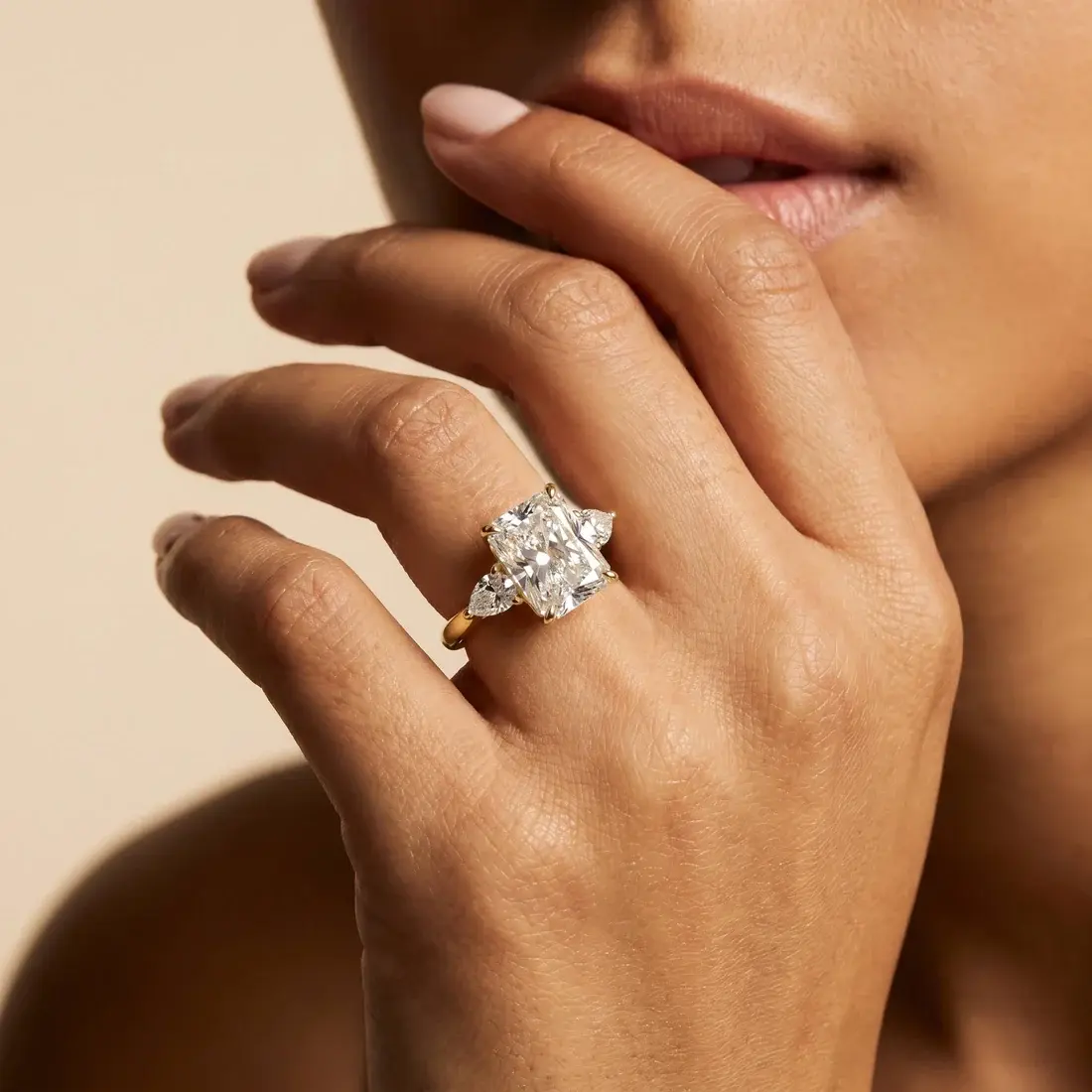
Yes, with a secure setting and appropriate care. A diamond resists scratching, but the finished ring can still be damaged by impact. Prongs, exposed side stones, and high-profile settings need attention, particularly for active lifestyles.
Consider the ring's height, corner protection, and comfort during normal activities. Remove fine jewelry for heavy exercise or impact-prone tasks, and check the setting periodically.
Are Radiant Cut Diamonds Good Value for Money?
Value means getting the appearance, craftsmanship, and comfort you want for the complete ring price. Compare the visible differences between 1ct, 2ct, and 3ct rather than assuming the largest center stone is automatically the best purchase.
Lab-grown diamonds generally provide more carat weight for the budget than comparable natural diamonds, although prices vary. If you want to compare radiant with oval, round, and other shapes, explore Leonids' broader lab grown diamond engagement rings collection.
For clean, modern minimalism, Paloma's solitaire and cigar band are worth considering. For elongated geometry with delicate extra sparkle, Amelie uses round accents. For a more distinctive three-stone look, Zoey combines a bezel-framed radiant with pear side stones.
What Should You Check Before Buying Online?
Before ordering, verify these six points:
1. Shape and size: Compare published dimensions and length-to-width ratio with the carat weight.
2. Images: Check which carat size is pictured and ask whether diamond-specific photos or video are available.
3. Quality: Review the listed color, clarity, certification type, and any available grading details.
4. Fit: Confirm US ring size, metal, setting height, and wedding-band compatibility.
5. Timing: Allow for made-to-order production and delivery, especially before a proposal date.
6. Returns: Understand whether customization or engraving makes the order final sale.
IGI certification: Leonids states that each individual diamond weighing 0.5ct or more receives an IGI report. Because pieces are made to order, the final report number is provided after shipment; sample certificates can be reviewed before purchasing. Do not assume exact-stone imagery or a final report number will be available before checkout.
Return eligibility: Eligible standard US orders may be returned within 30 days of delivery, subject to policy conditions. Customized and engraved pieces are final sale and are not eligible for standard returns or exchanges. Customers are responsible for return shipping. Check Leonids' current refund policy before personalizing an order.
Questions About Product Specifications?
We strive to keep our product information accurate and up to date, but occasional errors or inconsistencies may occur. If you have any questions about diamond dimensions, carat weight, color, clarity, or other specifications, please feel free to contact our team before placing your order. We're happy to clarify the available details and help you make an informed decision.
Three Common Radiant Cut Diamond Buying Mistakes
Comparing mismatched photographs: A 3ct sample photograph cannot show the exact size of a 2ct order. Confirm the pictured weight before judging finger coverage.
Choosing by carat or ratio alone: A higher ratio is not a higher cut grade. Compare millimeter dimensions, visible sparkle, and the complete design.
Ignoring setting height: A radiant ring can look beautiful from above, but a tall setting may snag on clothing or interfere with wedding-band pairing. Always inspect the side profile.
Final Thoughts: Choose the Diamond and the Ring Together
A radiant diamond should balance an outline you love, appealing sparkle, visible size, and a setting comfortable enough for everyday life. Ratios explain shape; millimeters explain scale; and real ring designs show how the finished jewelry will look.
Explore Leonids' radiant cut engagement rings to compare elongated lab-grown diamonds, available carat sizes, and setting styles.
Share