Oval Diamond Length-to-Width Ratio Guide: 1.30 vs. 1.40 vs. 1.50
Published:
Quick Answer
The best oval diamond length-to-width ratio depends on your preferred silhouette. A 1.30 ratio creates a fuller, rounder oval, 1.40 offers a balanced, elongated shape, and 1.50 delivers a slimmer, more dramatic appearance. Ratios around 1.35–1.45 are a useful starting point for a classic oval look. However, a diamond's ratio alone doesn't determine its quality or sparkle. Consider carat weight, actual dimensions, bow tie visibility, light performance, and how the stone appears on your finger before choosing.
What Is an Oval Diamond Length-to-Width Ratio?
An oval diamond length-to-width ratio, also called the L/W ratio or width ratio, describes how elongated an oval cut diamond appears when viewed from above. It's calculated by dividing the diamond's length by its width.
Length ÷ Width = Length-to-Width Ratio
For example, an oval diamond measuring 9.8 mm long and 7.0 mm wide has a ratio of 1.40.
A lower ratio creates a wider, rounder oval, while higher ratios produce a more elongated shape. Unlike carat weight, which measures a diamond's weight, the length-to-width ratio defines its outline and visual presence. Two oval diamonds with the same carat weight can have noticeably different proportions, face-up size, and visual impact.
Oval Diamond Ratio Chart: 1.30 vs. 1.40 vs. 1.50
|
Feature |
|||
|---|---|---|---|
|
Shape |
Fuller, rounder |
Balanced, elongated |
Slim, elongated |
|
Appearance |
Soft, classic |
Elegant, versatile |
Sleek, dramatic |
|
Finger effect |
Subtle |
Moderate |
More pronounced |
|
Example dimensions |
9.1 × 7.0 mm |
9.8 × 7.0 mm |
10.5 × 7.0 mm |
These illustrative measurements use the same width to demonstrate shape differences. They do not represent diamonds of equal carat weight or face-up area.
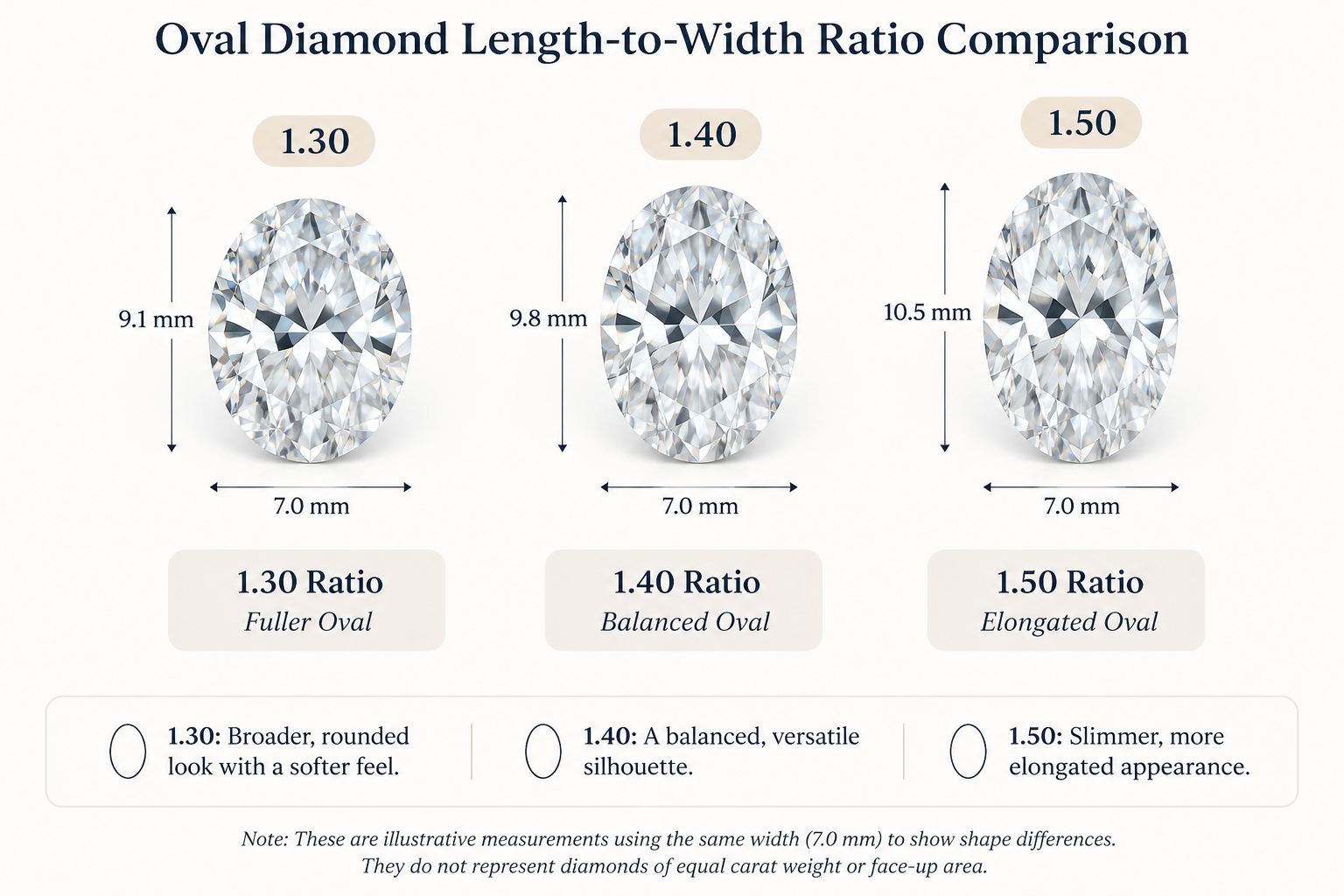
The image is AI-generated for illustrative purposes only. The actual appearance of the diamond may vary depending on the cut and carat weight. Please refer to the product images and videos of the specific product for the actual effect.
1.30 Ratio: Fuller and Softer
A 1.30 oval diamond ratio creates a broader, rounder silhouette. These rounder ovals appeal to buyers who prefer classic elegance over a distinctly elongated shape. Their fuller outline can look beautiful in solitaire and vintage-inspired engagement rings.
1.40 Ratio: Balanced and Elegant
A 1.40 oval diamond ratio balances graceful length with enough width to maintain a substantial appearance. It's a versatile starting point for shoppers seeking a well-proportioned oval with a timeless look. This shape works beautifully with solitaire, halo, and three stone settings.
1.50 Ratio: Slim and Elongated
A 1.50 oval diamond ratio creates a noticeably longer, slimmer silhouette. Higher ratios produce a more dramatic elongated shape that can make fingers appear more slender. This proportion appeals to buyers who prefer contemporary engagement rings and distinctive fancy shapes.
Which Should You Choose?
-
Choose 1.30 if you love a fuller, softer oval.
-
Choose 1.40 if you prefer balanced, classic elegance.
-
Choose 1.50 if you want a distinctly elongated silhouette.
If you're unsure, compare ratios around 1.35–1.45 before exploring fuller or slimmer shapes.
Which Oval Diamond Ratio Looks Best on Your Finger?
The most flattering oval diamond length-to-width ratio depends on your finger proportions, ring setting, and personal preference.
A fuller 1.30 oval creates a softer appearance, while a 1.40 ratio offers balanced elegance. A 1.50 ratio emphasizes length and may create a visually lengthening effect, particularly on shorter fingers.
However, there's no universal rule. Band width, flat or curved shoulders, side stones, and bezel settings can all influence how elongated or substantial the center stone appears. Comparing realistic on-hand images is often more helpful than relying on numbers alone.
Does a Higher Oval Diamond Ratio Look Bigger?
Not necessarily. Higher ratios create a longer diamond's outline, but they don't automatically increase visual spread or face-up area.
For diamonds of similar carat weight, a more elongated oval may look longer yet narrower than a fuller oval. Actual length, width, depth, and cutting proportions influence how much of the diamond's weight contributes to its visible size.
When comparing oval diamonds, consider their millimeter measurements alongside carat weight. This is a more reliable way to estimate face-up area than relying on the L/W ratio alone. Oval diamonds may also appear larger than round brilliant diamonds of comparable weight because of their elongated outline, although the difference depends on the individual stones.
Does Oval Diamond Ratio Affect Sparkle or Bow Tie?
An oval diamond's length-to-width ratio determines its shape, not its overall brilliance. Unlike round brilliant diamonds, oval diamonds do not receive a standardized overall cut grade from GIA. When evaluating ovals, consider proportions, facet patterns, symmetry, depth, and actual light performance.
The oval diamond bow tie effect appears as a darker, bow-shaped area across the stone's center. A slight bow tie can be normal, while a prominent dark shadow may affect visual appeal. Bow tie visibility varies with facet arrangement, viewing angle, and lighting conditions.
Two oval diamonds with identical ratios can display different bow tie patterns. A well-proportioned oval with well-aligned facets and better light performance may offer a more attractive appearance, regardless of whether its ratio is 1.30, 1.40, or 1.50.
Also, don't judge diamond quality by clarity or color grades alone. An internally flawless stone isn't automatically more beautiful than a slightly included diamond with better overall visual performance. Always use visual inspection and compare stones under different lighting conditions. To explore more about the bow tie effect in oval diamonds, please read What Is the Bow Tie Effect in Oval Diamonds? How to Spot a Good One for relevant information.
Find Your Perfect Oval Lab-Grown Diamond Engagement Ring
Whether you love the soft proportions of a 1.30 oval or the elongated elegance of a 1.50, the right diamond should reflect your personal style. Explore Leonids Jewelry's oval lab-grown diamond engagement rings in 14K gold and platinum, and discover a setting that complements your favorite silhouette.
Explore Oval Lab-Grown Diamond Engagement Rings
FAQs
What Is a Good Starting Ratio for an Oval Diamond?
Ratios around 1.35–1.45 are a useful starting point for shoppers seeking a balanced, elongated oval. The ideal proportion ultimately depends on personal preference.
Does Oval Diamond Ratio Affect Carat Weight?
No. Carat measures diamond weight, while length-to-width ratio describes its shape. Two diamonds with the same carat weight can have different ratios and dimensions.
Can Two Oval Diamonds With the Same Ratio Look Different?
Yes. Facet patterns, cutting proportions, actual dimensions, symmetry, and light performance can make two oval diamonds with identical ratios look noticeably different.
Share